|
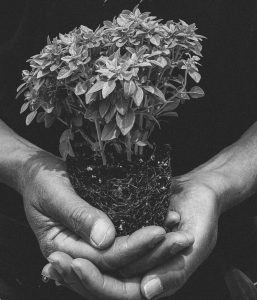
Last week I wrote a bunch about the importance of organizational culture—how much difference it makes to be part of a healthy culture versus an unhealthy one, and my metaphorical context of imagining organizational culture as the soil in which we’re working. This week I’ll begin to share my list of things we can do to enrich the cultural soil in our companies. There are a baker’s dozen listed in this piece, and I have sixteen more to put out in the world next week. As my good friend Daphne Zepos once told me, “There is always so much more to say.”
The story of an organization’s culture is one that every leader will be crafting for the rest of their life. Although it’s easily ignored in favor of a focus on fast-moving market trends, flashy statistics, or shifts in strategy, I would suggest that culture is a critical—and in the long run, a hugely constructive—place to put our attention. I’ve come to believe that the story of our organizational culture could be the longest-lasting legacy we leave in the world. As Irish storyteller Gareth Higgins says:
You never know when a story’s over… especially when you’re in it… perhaps most especially when you’re trying to tell it… You don’t have to control the story. The story can change and things that you once held dear float away and things you thought you’d never believe can become the most obvious manifestation of love.
Natural Law #19 states that “Everything—and every one of us—is imperfect.” That certainly holds true for organizational cultures. As is true in nature, our cultural soil is always evolving; each day is different from the one that preceded it. Like it or not, good things will always coexist with unwanted complications. Positive moves forward happen at the same time as shortfalls. If we uncaringly allow our organizational cultures to erode, I believe we are doing a great disservice to the people we serve (both coworkers and customers) and the communities of which we’re a part. We all, always, need to get better.
Depleted soils don’t do well in nature, and the same is sure to happen in our organizations as well. In her beautiful book Farming While Black, Leah Penniman shares: “Haitian farmers say ‘Te a fatige,’ which means, ‘The earth is tired.’” The pandemic has put most of us to the test; stress levels have been running high all year. Similarly, a single-minded pursuit of economic extraction—all too common in the world at large—will also leave the cultural soil in all too many companies “tired” as well. As Peter Maurin, co-founder (with Dorothy Day) of the “Catholic Worker,” said, “It is impossible to have a healthy and sound society without a proper respect for the soil.” I would agree in regards to nature and in organizations as well. Leah Penniman says it simply and well—if we want to create well-being, “We need the soil to be alive.”
While ups and downs will always happen, the extended decline of organizational culture over time is an obvious indicator of ill health. As early 20th century conservationist, forester, and philosopher Aldo Leopold said, “The destruction of soil is the most fundamental kind of economic loss which the human race can suffer.” While we will never attain perfection, we can work, day in and day out, caringly and constructively, to do better. I agree with Dr. Leopold, who long ago said: “We shall never achieve harmony with the land, any more than we shall achieve absolute justice or liberty for people. In these higher aspirations, the important thing is not to achieve but to strive.”
As I wrote last week, healthy cultures, like healthy soils in nature, are more resilient. Whatever is planted in them does better. Erosion is reduced, the odds of disease are diminished, and pest problems are less prevalent. Healthier cultures recover better from failure, and are more likely to serve as a positive base as we build our preferred future. Healthy cultural soils are more sustainable and, in the best of cases, regenerative. As Aldo Leopold wrote, “Land health is the capacity for self-renewal in the soils, waters, plants, and animals that collectively comprise the land.”
Clearly, the cultural soil in which we sit, stand, and work every day has an enormous impact on the quality of our lives. And since, as sustainable farmers often say, “pesticides don’t stop at the fence line,” what happens at work will, inevitably, leach into the other parts of our lives as well. We can talk about walling off our work days from what we do out of work, but whether we like it or not, what happens at work definitely does NOT stay at work. Both the best and worst of our workplace cultures will manifest in the energy we emit everywhere we go. Healthier cultural soil can help us heal as human beings, tease out our natural creativity, and work to bring wonder and beauty to every element of our day-to-day lives. I would like to believe that, in this way, Zingerman’s has contributed positively to the greater community of which we’ve been a part over the last 39 years.
Just as land restoration is not an overnight activity, so too the soil of an organizational culture will recover, over time—only if the people who are part of an organization are committed to making that improvement. Leaders can lead, and we carry a huge responsibility, but cultural health is ultimately a collective effort. A business may be privately owned, but as Dr. Edgar Schein says, “Culture is a property of a group.” Schein makes clear that, like the soil on a farm, culture cannot be quickly changed out. “Culture is deep,” he writes. “Culture is broad. Culture is shockingly stable.” Which means that it takes time to make a lasting change—in my experience, about three years. The minimum period of transition from industrial agriculture is also three years. Slow though it is, it’s important and uplifting work, from which both people and the planet benefit. As Erin McMorrow writes in her great new book Grounded, “The work of healing the soil is thoroughly divine work.”
My good friend Melvin Parson has taken all this to heart. It’s a big part of the purpose behind his thoughtful and caring creation of the We the People Opportunity Farm in Ypsilanti. The program works to bring urban agriculture back into the Black community and also to provide jobs for returning citizens. Of the interns We the People works with, he says, “I don’t just want to help the individual get better by putting them back in the soil that got them sick to begin with. I want to change the soil, then plant the seeds and watch them grow.” As Marcy Harris, marketing manager at the Roadhouse, writes, “Melvin is tending to the soil of his community, and is watching his beliefs about how his vision can impact people locally take root.” Melvin makes clear, “‘Changing the soil’ means providing a rich environment where folks can flourish.”
So how do we effectively enhance our cultural soil? What follows is a series of mindsets, beliefs, and behaviors that I believe can—and will—slowly but surely restore, enhance, and enrich the cultural soil of any organization. I have more to share for next week’s writing. This work, as I’ve been saying, is neither quick, nor will it ever be complete, any more than a good farmer will “finish” enhancing the health of their soil. As Grace Lee Boggs writes, “This kind of transformational revolution obviously requires enormous patience.” The good news is that you don’t need to start work on all of them at the same time—pick one or two that feel right to you, and start, a bit here and a bit there, to enrich your cultural soil.
Positive Beliefs
Because beliefs drive behavior, and because beliefs—consciously chosen or unconsciously carried—alter what we see, hear, taste, feel and experience, they have a huge impact on culture. In the ecosystem model, beliefs are the root systems of our lives. Permaculturist Toby Hemenway writes, “Roots loosen and aerate soil, build humus . . . fetch minerals from rocks.” In my metaphor, air is purpose, humus is humility, and minerals are money—positive beliefs help enhance all three. In the metaphor, I imagine the spirit of generosity as moisture, and positive beliefs help there as well—deeper, bigger, roots open the soil to allow water to penetrate more slowly and effectively into the soil.
Additionally, deep root systems of beliefs anchor the cultural soil. As Leah Penniman writes about Haiti’s agricultural struggles after European deforestation, “Without tree roots to hold the soil in place, the earth washed away into the ocean.” It’s the same in business—without positive, deeply rooted, and commonly shared beliefs, the cultural soil can erode all too quickly.
It’s worth noting that in the same way that weeds can overrun a garden, negative beliefs can kill a culture. As Dr. Vivek Murthy writes, “When the beliefs that serve as a basis for connection are based on hatred and fear, they distill a poison that slowly erodes the integrity of the community and ultimately, the well-being of its people.” For much more on beliefs, see The Power of Beliefs in Business.
Increased Kindness
Kindness, I’m convinced, is one of the quickest ways to enrich cultural soil. I wrote extensively about the practice of Kind-zen in “Working Through Hard Times,” and I believe in its benefits now more than ever. As Vivek Murthy writes, “Kindness can bridge the divides between us, healing our society even as it relieves our personal loneliness and brings us together.” In 1902, the same year the Deli’s building was built, Booker T. Washington addressed the annual gathering of the Association of American Agricultural Colleges and Experiment Stations: “Unkindness to anything means an injustice done to that thing.”
Share an Inspiring Vision
Writing a positive vision is one of the best ways to help go forward on the most productive of paths. It allows us to focus on what we want, not on what we want to avoid. Without it, our anxiety about what could go wrong, and the failures we fear, are more likely to happen. (I know because I’ve done this in my own life, and seen so many others do it as well.) Anodea Judith, author, speaker, and yoga teacher (quoted in Erin McMorrow’s Grounded), says, “Only by standing in our own ground can we determine our future.” From that grounded place, our long term visions can describe the culture we want to create, not just lament the parts of the past we don’t want to lose. I’ve written volumes about the power of visioning elsewhere—suffice it to say that a well written one will have a huge impact on our culture.
Increased Diversity
The healthiest ecosystems in nature are the most diverse. (It’s #17 on my forthcoming list of additional Natural Laws.) Permaculturist Jonathon Engels explains, “Monocultures have the tendency to deplete soils of whatever nutrients the cash crop likes.” I believe it’s just as true in organizations as well. Meaningful, inclusive, active engagement with a diverse group of thoughtful individuals, information streams, sources of study, etc., brings creativity, resilience, understanding, and leads to compassion and connection. Race, age, background, skill set . . . as Margaret Mead wrote, “An ideal culture is one that makes a place for every human gift.”
A Boost in Hope Levels
This is a subject that’s been close to my heart for the last six years. Richard Boyatzis and Annie McKee write in Resonant Leadership that, “Hope enables us to believe that the future we envision is attainable, and to move toward our visions and goals while inspiring others toward those goals as well.” It’s very clear to me that all healthy organizational cultures have high hope, and that, conversely, low hope cultures never do well. There is much more on this in Secrets #44 and #45, and in “Working Through Hard Times.”
Support Creative Work
Healthy cultures, I’ve long believed, bring out the creativity that is naturally present in every person we have ever hired. Most organizations miss out on much of that potential. In nature, Erin McMorrow writes, “There is microscopic life in the soil. That microscopic life is necessary, along with the worms, and everything else that goes on in the soil. It’s a teeming ecosystem inside of the soil.” That microscopic life in the metaphor is the millions of ideas a year that pop into the heads of any group of healthy humans. The more we can encourage the “artist” to emerge in everyone, the more positive our culture is likely to be.
Caring Conversations
I mentioned last week that I’ve been part of a wide range of difficult conversations inside our organization over the last year. One way to look at these is to say how “bad things must be”—why else would we “have to have these hard conversations.” There’s an alternate angle though. I’ve come to believe that the willingness to have this kind of conversation—held caringly and with dignity in service of a getting to a better future—is one of the most meaningful elements of a healthy culture. Conversations of this sort can be hard, but they honor our natural imperfections, acknowledge that all communication is imperfect, and own that we each bring our baggage to the mix. Work and life are always challenging anyways, and pandemics, divisive politics, and violence in the world around us add to the anxiety everyone (including me) feels.
In my experience, having these conversations is hard at home, it’s hard with partners, and it’s hard with new hires. And yet, as David Whyte writes, “What we have to confront in the present workplace is the reluctance to engage in conversations that really invite the creative qualities hidden deep inside each human being.” Like composting in nature, these conversations can turn loss and endings into enrichment for the ecosystem. As Rabindranath Tagore tells it: “Everything comes to us that belongs to us if we create the capacity to receive it.”
Belonging and Inclusion
Even as a fairly extreme introvert, I long ago came to understand that everyone wants to be a part of something greater than themselves. As Dr. Vivek Murthy writes, “Connection, not hatred, is the glue that makes us feel we all truly belong.” Reaching out to those who feel excluded, bringing newer folks more quickly into conversation, engaging and exchanging thoughts across boundaries, all lead to healthier culture.
Shared Language
Robin Wall Kimmerer writes, “To be native to a place, we must learn to speak its language.” One of the best ways to welcome new folks into your culture is to actively help them learn your language. Every organization has idioms, sayings, and meanings that are not understood by outsiders. And because humans think differently in different languages, it’s imperative that we go out of the way to help those who aren’t yet fluent in our language, lovingly, to learn it. As Ursula K. Le Guin wrote, “Words . . . transform both speaker and hearer . . . [and] feed understanding or emotion back and forth and amplify it.”
A Service Mindset
Service to guests, service to each other, service to the community, or Servant Leadership all set a positive tone, while increasing patience and positive energy. When we give freely, making a conscious choice to generously and freely choose service, the cultural soil softens in the best possible way. As Vivek Murthy makes clear, “Giving and serving others doesn’t just strengthen our communities; it enriches our lives and strengthens our own bonds to the community and our sense of value and purpose.”
Self-awareness
Erin McMorrow writes, “We must do both the inner and outer work to get where we are going . . . What we need in our personal lives is what we need worldwide. As we create a regenerative world, we create regenerative lives for ourselves.” And, I would suggest, the inverse is equally true. I’ve long believed that those who do best in our organization are the most collaborative and the most self-reflective. When we’re able to manage ourselves more effectively, collaboration increases, drama drops, engagement improves, and energy is enhanced. The Dalai Lama believes, “That eventually will create a peaceful family, a peaceful community, and through that, a peaceful world.” As he rightly points out, “We can never obtain peace in the outer world until we make peace with ourselves.”
Honoring Emotion (Grieving the Past, Constructively Expressing Anger, and Finding Joy)
In the organizational ecosystem model that I’ve been working on, emotions are akin to the weather. We have very little say in when they show up, but there’s a lot we can do to respond to them effectively. If we force people to bottle up their emotions, it will inevitably lead to organizational ill-health. Helping folks (that includes me) learn to work with and through them caringly and constructively makes a huge positive difference. As Zach Milner, a manager at the Roadhouse, wrote to me a few weeks ago, “I’m really blessed to work in an organization that allows emotions to be shared in constructive ways!”
With this in mind, we need to make peace with our personal and organizational pasts in order to push forward productively into the cultural future of our choosing. As Grace Lee Boggs wrote, “In order to create a new movement, we must first understand the old.” If we’re part of an organization with a long history (as we are here at Zingerman’s) that may mean grieving parts of the cultural and organizational past—wonderful as they might have been/seemed at the time, they are gone.
Love, and Let Love
I’ve come to believe in the last few years that love naturally manifests in healthy organizational ecosystems. And, at the same time, we can each bring it into every action we take and every sentence we speak. I’ve written a bunch about love and it’s got a whole section in our 2032 Vision (write me if you want a copy). Committing to love so overtly and extensively is, I believe, already starting to enrich our culture. When I taught our Welcome to ZCoB new-staff orientation this past week to over 30 new staffers (yes, we’re hiring if you know anyone who’s looking for a job), when we did our reflection at the end of the class, love was one of the most remarked upon new learnings that folks commented on. A loving culture can carry us a long way. As Aldous Huxley wrote, “Love is the last word.”
Every farmer knows that the richer the soil the better the plants in it will do. The best plant put into unhealthy soil will almost never do well. Same with people “planted” in organizational cultures. Friend and chef Dan Barber writes, “If soil is compromised there can be no such things as great food.” Our organizations depend on us all to this work. When we do, great things can come from it. Cultural improvement is the work we accept as leaders for the rest of our lives.
In bringing the context of culture back into nature, I thought I’d close with this beautiful piece from poet, surfer, and writer, Lex Weinstein:
How can I begin to know your entirety?
You are ripe with life, complexity, and power
You are the paradox of creation,
vulnerable and tender to life,
Yet tough enough to endure
Everything that is important I learned from you.
The flowers you grow are people
Your abundance – your community
The ones you shower with affection
With stability
With home
With hope
For every fruit you bear
Every success you shine into existence
Every wisdom grown on the vine of your tangled life
You feed us.
How may I better tend to you?
All of the sessions that ZingTrain is currently offering online—Courageous Conversations, How to Write Standard Operating Procedures, The American Dream Game, Leader’s Guide to Performance Management, etc.—offer info that will contribute positively to your culture. And for more thoughts on helping build healthy organizations see Parts 1, 2, 3, and 4 of the Guide to Good Leading series. |