
Your 2019 Gift List: 32 of Ari’s Favorite Things
 Putting together this list each year always presents a problem. A really good problem mind you, but a problem nevertheless. There are so many great products on our shelves, deli cases, and menus, that it’s quite a challenge to narrow things down to make the list manageable.
What follows is a good blend of offerings from around the ZCoB; some old, many new; some small, some big. The French philosopher Simone Weil once wrote that “attention, taken to its highest degree, is the same thing as a prayer.” What follows is my attempt to pay very close attention to two and a half dozen great foods you can find around the ZCoB. They have all lifted my spirits many times.
Each time I try them I’m reaffirmed in the beauty that we’re so fortunate—or in Simone Weil’s sense, blessed—to be around! Thank you all for making it possible for us at Zingerman’s to do what we do every day! I feel lucky to have landed in such a special community!! – Ari
FOR THE SWEET TOOTH
Lakrids Danish Licorice at Zingerman’s Candy Store
The Scandinavian candy classic comes to Zingerman’s Southside
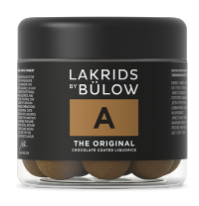 We’re really excited to stock superb handmade licorice from an artisan maker in Denmark at the Zingerman’s Candy Store on Plaza Drive! The licorice comes from a small artisan firm named Lakrids, started by a young man named Johan Bulow on the island of Bornholm in 2007. Johan started Lakrids to make something special and to get people re-energized about licorice. He cooks it in his small island shop—much like fudge is made in Northern Michigan—and the response has been amazing.
Tourists have been particularly drawn to this display of Danish tradition and, in the process, a whole new set of licorice lovers have been born. Lakrids’ business is booming—exports are expanding to fine food shops all over the world.
The scientific name for licorice, glycyrrhiza glabra, was taken from the Greek word for sweet root (glykys, meaning sweet, and rhiza, meaning root). Licorice was used as a remedy by ancient Egyptians and Assyrians, mostly in the form of a drink. Plain licorice root has been eaten as is for thousands of years. Licorice candy in the more modern form dates to the 16th century and the monastery of Pontrefact in England. Salted licorice is another story altogether. It is, I suppose, something of an acquired taste. The thing is that most of Scandinavia seems to have acquired it—Sweden, Norway, Denmark, Iceland, Finland, the Netherlands, and (Northern) Germany can be said to be the “salty licorice countries.”
Interestingly, I’d be remiss if I didn’t point out that all of these countries also score super high (Finland is at the top) for world happiness studies! Is there a correlation? Could be! I’m already pretty happy, but what’s the risk of trying to go higher by adding a bit of this Scandinavian specialty to my shopping list?
We’ve got three great offerings from Lakrids (and more, shop manager Allison assures me, are on the way):
Lakrids #1 Straight up, neat
This is the strong cup of black coffee of the licorice world. Lovably, intense little bites of lavishly flavorful licorice lightly sweetened with molasses.
Lakrids #2 Salted licorice
The cult candy that helps keep Scandinavia special.There, kids grow up eating salted licorice and Scandinavian expats go crazy looking for it. Bulow says, “When your lips close around a bite of this strong, salty liquorice, the potent Nordic taste explodes on your tongue, bringing up associations of the sea, tar, bonfire smoke, and the scent of resin.”
Lakrids #3 Real red licorice
If you ever wondered what would happen if Twizzlers went to the moon but came back to earth as an artisan offering, this is the answer. (I’m sorry to say, Twizzlers actually have no licorice in them at all!) Instead of red dyes, these are colored and flavored with a blend of blackcurrant, cranberry, lemon and strawberry juices.
Keep some of these delicious Danish treats on your desk (or hide them in your drawer), stick ‘em in your toolbox and take them to a job site, pack them for the plane, or pop a jar in your glovebox for moments when you need a little something to shake your mind back awake, or to help yourself get re-centered.
Jerry Garcia once summed up the licorice situation quite well: “Our audience,” he said, “is like people who like licorice. Not everybody likes licorice, but the people who like licorice really like licorice.” Whether you like the Dead or not, you might want to make your way over to the Candy Store to sample this delightful Danish treat! It could be the beginning of a long and loving relationship!
Available at Zingerman’s Candy Store!
Christmas Stollen
Holiday Season Hit from Zingerman’s Bakehouse
I really think this is one of the all-time best things we make at the Bakehouse. I’ve been tasting it regularly since it came out for the season and it seems better than ever. The dedication to steady improvement, mastering technique, and always trying to take things to the next level comes through in the flavor!
Stollen, as you likely already know, is the traditional German Christmas cake. It’s made with an incredible array of ingredients including sweet butter, Bacardi® rum, candied orange, lemon zest, fresh orange juice, Michigan dried cherries, citron, currants, almonds, golden and red flame raisins, organic wheat flour, Indonesian cinnamon, lots of real vanilla, and more. The whole thing is brushed with rum butter—not once but three times—and dusted with powdered sugar.
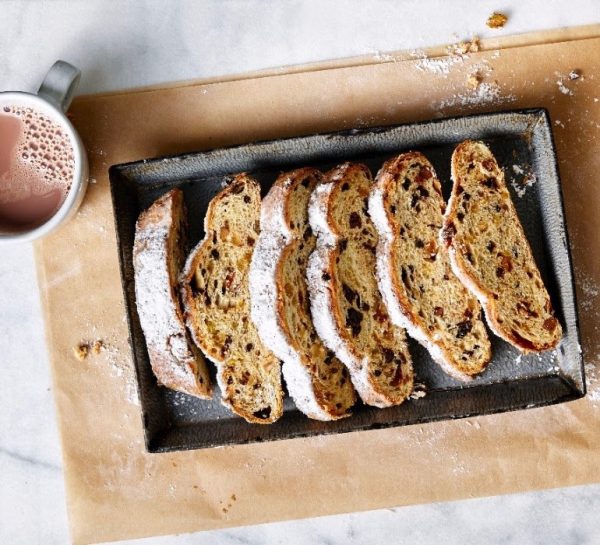
A lot of what I like about it is that its flavors are so balanced and yet so big. Even with all of those amazing ingredients, no one of them dominates. You get a touch of creaminess up front from the dusting of powdered sugar. Then you taste the butter and dried fruit as you break through the thin crust, then the tartness of the dried cherries, and sweetness of the raisins. The citrus stays in the background, the vanilla and cinnamon come through subtly but meaningfully in the finish. And it all lingers with a really nice, mouth-watering finish. I’ll run with what Amy Emberling (one of the two managing partners at the Bakehouse) said, “When you taste it, you understand why it’s been a German Christmas tradition since 1545! Who can argue with 472 years of customer appreciation?”
The Bakehouse stollen are packaged in lovely cloth bags, making them look as exceptional as they taste. Keep a few on hand in case company comes by unexpectedly!
At Zingerman’s Bakeshop, Deli, Roadhouse, and by Mail Order!
Zzang!® Bar Bites in a Beautiful Gift Box
A box of beautiful old-school chocolate confections for the 21st century
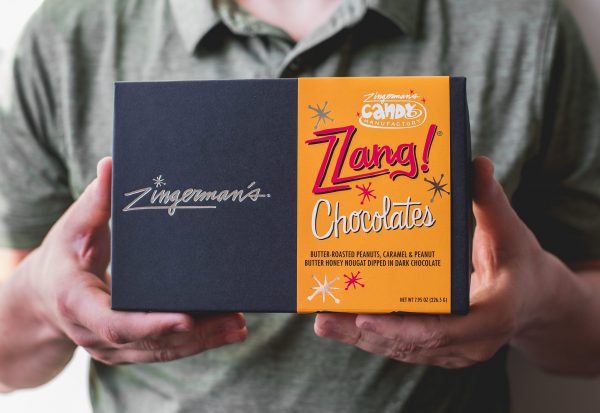 Each beautiful, one-inch square Zzang!® bite is built around a homemade peanut butter and honey nougat, mixed with butter-roasted Virginia Runner peanuts, and a caramel of Muscovado brown sugar from the Indian Ocean island of Mauritius, dipped into dark chocolate from Colombia, all of which is taken to the next level with just the teeniest loving touch of sea salt. Pretty terrific. Oprah’s O Magazine marveled at them: “Chewy, crunchy, sweet, salty and highly addictive—this luscious handmade candy bar puts the vending machine stuff to shame.”
We’re super excited to have those amazing bars cut into delicately wrapped, delicious boxes of incredible candy bites, designed by our own Nicole Robichaud.
You can get these beautiful boxes at Zingerman’s Deli and Roadhouse. And, at the source—the Candy Store, where you’ll find a whole little workshop full of crazy good candy and chocolate. The Candy Store is loaded with lovely sweets of all sorts, from at least fifteen countries! Come by and treat yourself, your loved one, your boss, your best friend or someone you just met to something caringly crafted by our own sugar artisans at the Candy Manufactory or one of their colleagues elsewhere in the world.
At Zingerman’s Candy Store and Roadhouse.
Swedish Fish Show up at Zingerman’s Candy Shop
From Malmo to Michigan
Like sweets? Maybe you should move to Sweden! They seem to have a candy culture beyond anything I’ve ever imagined. A study a few years ago done by the Swedish Board of Agriculture showed that the country that’s best known here for the Nobel Prize, political neutrality, and meatballs, had the highest candy consumption per capita in the world. That’s right, when it comes to candy, Sweden—not France, not Belgium, not Britain—is #1!! Swedes eat about 35 pounds per person every year. (By contrast, Americans consume a mere 22 pounds!) That means that the average Swede eats over half a pound of candy every week.
How do they do it? Apparently, every Saturday in Sweden is essentially a national holiday—what Swedes call lördagsgodis, meaning “Saturday candy.” It sounds, from afar, a bit like prepping for a personal Halloween purchasing binge, but instead of it being an annual autumn activity, lördagsgodis happens every week! People go to the store and pick from bulk candy bins and then go home and eat!
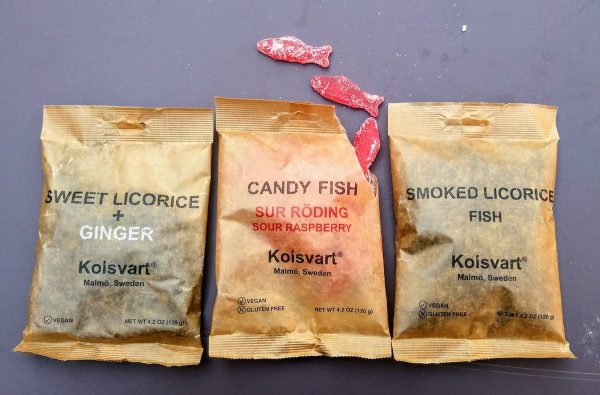
You and I can start by simply eating some ourselves, right here in Ann Arbor. We don’t need to go wild—just pick up a bag (or two or three) of these amazing craft candies from the small Swedish artisan firm of Kolsvart. They’re delicious. And they also come in really cool, lovely packaging.
Kolsvart is a small, craft-focused firm started by a few friends in the southwestern Swedish town of Malmo about five or six years ago. To start us off we have three varieties on hand (more, I have a feeling, are forthcoming).
Sweet Black Licorice Ginger
This is sweet, pure licorice mixed with a bit of ginger. Sound simple, tastes fantastic! You can eat them out of hand, bring a bag to the movies or the ballgame, put them out in a dish after dinner. Great diced into small cubes and then tossed onto a green salad, or even in a licorice-laced version of a Waldorf salad.
Raspberry Fish
Swedish fish at their exceptional artisan best! Made with fresh raspberry juice and sugar—no artificial additives or colors. Maybe we could call them “gourmet gummies?” They’re only slightly sweet, a touch tart, really terrific. Dice and toss onto fruit salad! Or on ice cream. Or just eat by the handful, straight from the sack.
Smoked Salty Licorice Fish
The candy equivalent of smoked fish. Black licorice “fish,” cold-smoked over Swedish alder wood. They have that same sort of smoky, unfamiliar at first, but ultimately kind of catchy, sort of sense one gets when drinking Lapsong Souchong tea or a great Scotch whiskey. Wild. Intense. Smoky. Not for everyone, but uniquely compelling for those who get into them! A bit of umami excellence from southern Sweden.
Oh yeah, the packaging. In the spirit of #17 on my list of Emma Goldman’s life and business lessons, “ends and means must be congruent.” In both at the same time, the Kolsvart candy bags look as exceptional and as artisanal as the hand-crafted candy inside! Lovely, light kraft paper packages, that, like their raspberry Swedish fish are almost, but not quite, translucent.
Stop by Zingerman’s Candy Store to try some of these terrific Scandinavian candies.
Townie Brownie Cake from the Bakehouse
A wonderful wheat-free way to eat dessert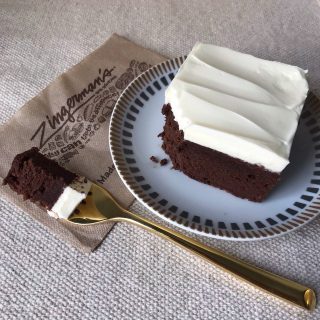
For the last ten years or so, the Bakehouse’s Townie Brownies have been a bit of a secret—really delicious, cakey, slightly crumbly brownies made without wheat but so wonderful that pretty much everyone loves them! While the gluten-free community has taken to them for obvious reasons, the truth is that they’re great to eat for pretty much any human who has a hankering for a really good brownie! Thanks to the creative crew at Zingerman’s Bakehouse that Townie Brownie goodness is now available in cake form!
As the folks at Bakehouse say, “Townie Brownies are as unique as the Ann Arbor natives they’re named after. Made from ancient grains commonly used in South America, amaranth, and quinoa. They’re packed with protein, spiked with chocolate chunks, and best of all, wheat-free!” (They also appropriately add: “While the ingredients of the brownie itself are wheat-free, they are made at the Bakehouse where we use wheat flour in other products. If your wheat or gluten intolerance is severe, it is suggested you consult with your personal physician before consuming this product.”)
The cake is made with real vanilla, sweet butter, sugar, fresh eggs, dark cocoa, and Valrhona Satilla chocolate chunks. Between the layers? Vanilla Swiss buttercream. Like all our cakes, it will taste best (and have the best texture) if you let it come to room temperature first (eating good cake cold out of the fridge is like eating great cheese at 35 degrees—you miss out in 80 percent of the flavor!)—it’s got a really nice, long, cocoa-y finish!
You can get a slice of Townie Brownie cake at the Bakeshop, the Deli and at the Roadhouse!
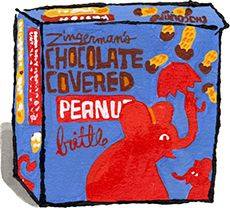
Chocolate Covered Peanut Brittle
A terrific treat from Zingerman’s Candy Manufactory
What can I tell you? The Candy Manufactory’s incredible, darkly toasted peanut brittle dipped into dark chocolate is delicious. Great peanuts, dark chocolate, a bit of butter, and a snippet of sea salt. A great stocking stuffer, snack, or something to stick in your pocket if you’re getting on the plane for a long flight or in the car for a long drive.
At Zingerman’s Candy Store, Deli, Roadhouse or zingermans.com.
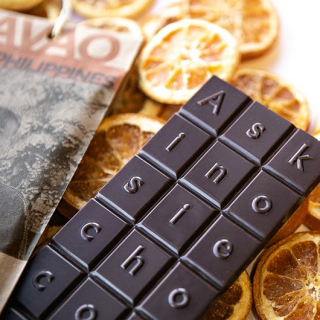
Shawn Askinosie’s new Dark Chocolate and Orange Bar
Orange and chocolate come together to make something super special
As we approach the end of 2019, the combination of orange and chocolate might seem mundane, but four hundred years ago in Europe, the combo was completely cutting edge. If one wanted to reach for the exotic, impress one’s royal cousins, catch the attention of your upper crust colleagues or get in good with a high ranking court dignitary, chocolate with orange might well have been the ticket. Neither was native to Europe. And at that time, both were exceedingly exotic. In fact, it’s likely the two “met” for the first time somewhere in southern Europe. Sicily is a good bet. Spain might be more likely.
(And I should note, Sicily was ruled by Spain from 1479 through into the first part of the 19th century.).
Neither ingredient would have been well known among Europeans of the 16th century. Oranges are native to China. They started to arrive in Europe, likely into Sicily by about 1400. Chocolate would have come a century later after the return of Columbus from the “new world.” Both were originally approached tentatively, exotic signs of wealth. So too was sugar which came from India. Modern marketers now look at “early adopters” in the market place, and the same would have been true back then; it would have been innovators in the royal courts, the merchant class, and the church would have been the first to take a “chance” on these new luxuries. Because chocolate was mostly consumed in that era a beverage the original blend would likely have been hot chocolate scented with orange flower water. The Spanish royalty seems to have been big on it. Today you might buy a Tesla. Back then you might have served tiny cups of orange-scented drinking chocolate.
In the world of modern confectionary, the British company Terry’s introduced its (still famous, though, respectfully, nowhere near as good as the bar I’m writing about here) Chocolate Orange in 1932 at their factory in York. It was—and still is—shaped to look like an orange with individual “segments” to eat. It became a huge Christmas item—at one point post-WWII, it was estimated that one in ten British Christmas stockings had a chocolate orange in it. (Oranges have a long connection to luxury in Europe—they were used a lot at Xmas to tie with the idea of St. Nicholas delivering sacks of “gold.” And more generally, long before mass shipping of produce, getting an orange anywhere in northern Europe—or the northern US—would have been quite the sign of something special!
But that was then and this is definitely now. Orange and chocolate are on my mind these days because they are the latest, and loveliest, of my good friend Shawn Askinosie’s incredible chocolate bars. I don’t think he’s ever sent me anything bad to taste yet. In fact, each new offering blows my mind. In the last year that’s been the new Peppermint bar, the new Super Dark (88%) bar, and the limited edition Zeke bar. And now this one! The bar begins with the carefully crafted Trinitario cacao that Shawn brings from the Philippines. It’s a 58 percent dark chocolate—very smooth, gentle, cocoa-y, that comes from farmer Peter Cruz. Thanks to Shawn’s good work, Peter became the first Filipino farmer to export cacao since their land reform in the mid-1970’s. The cacao is conched and blended with Turbinado sugar and cocoa butter (made by the folks at Askinosie from the same beans), and then and a nice bit of orange pulp and orange peel. The finished flavor is something special. Shawn’s enthusiasm for this new seems especially high. “I love orange. You should have smelled the factory this week!”
To be clear, it takes a long time to craft a bar of this quality. Natural Law #10 (see Zingerman’s Guide to Good Leading: Building a Great Business) is that “it takes a lot longer to make something great happen than most people think.” This bar is no exception—Shawn says it took about 20 iterations to get the ratios right, all done in a series of experiments that took over 18 months to complete. Like any good partnership, they bring different things to the table. The chocolate is the bass line—dark, nutty, cocoa-y. The orange comes at it from the other end—it’s the violin playing over top. Light, bright, sensual, ethereal. Together, the combo is otherworldly. The royal court of Spain would have likely swooned over it. And if you have anyone in your circle who loves orange and chocolate together, you’ll definitely want to add this beautiful new bar to their holiday list.
Can a chocolate bar make that much difference? Given the state of the world, I think every little of beauty we can spread makes a small but ultimately meaningful difference. That’s certainly the case for the growers that Shawn works with. Both Shawn and I are big fans of the work of the Irish philosopher John O’Donohue, so I’ll close this piece with a quote of his that conveys what I’m thinking after eating and reflecting on how good this bar is. Share a bit of your bar with anyone you care about. Or even someone you don’t yet know. As O’Donohue writes, “The time is now ripe for beauty to surprise and liberate us.”
Available at Zingerman’s Candy Store!
Paw Paw Gelato from the Creamery
This once ubiquitous, old-time American fruit has become a big Zingerman’s fall fruit tradition.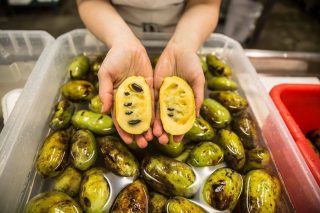
Working with a family of paw-paw-passionate farmers in western Michigan, Zingerman’s Creamery turns the fruit into fantastic gelato every autumn.
Don’t know paw paws? It’s my kind of underdog—hard to grow and, despite its long history, hardly anyone has heard of it. Like a lot of the old fruits, the amount of work to grow vs. the yield in picked paw paws, isn’t all that great.
The trees have long, dark green, sort of droopy-eared leaves. In fact, they’re the largest edible fruit that grows in North America—the biggest one ever recorded was 18 inches across! They look a bit like mango but in pear-skin colored flesh. You can make the puree into custard, pastry cream, paw paw pie, or . . . gelato.
Over the years, I’ve come to think of the paw paw as the North America equivalent of passion fruit. Slightly citrusy, kind of custardy when ripe. The flavor is not strong. Maybe a hint of lime, a little vanilla, papaya, a touch of the taste of ripe pear. The paw paw gelato is pretty special. Light but luscious, definitely delicious! A rare bit of Midwest culinary history made current again at the Creamery.
At the Zingerman’s Creamery Cream Top Shop, Next Door Cafe, and Roadhouse. Or ship some gelato with Zingerman’s Mail Order!
FOR THE ASPIRING CHEF
Il Tratturello Olive Oil

Bold Green Oil from the Molise
If you love intense, peppery, green oils, check this one out ASAP. Each day we wait will mean it gets just a tiny bit mellower, so carpe diem! Come down to the Deli today while it’s at its full, fresh, superfine, peppery best!
The Il Tratturello comes from the little touristed region of Molise, a couple hours’ drive due east from Rome. It’s produced by the Travaglini family using organic methods. Francesco Travaglini argues that the Molise is an ideal growing region for olives—coldish in the winter; hot in the summer. The oil is made mostly from a special local variety of olive known as Gentile di Larino (60 percent), along with a bit of the more frequently seen Frantoio (28 percent), Leccino (10 percent), and Moraiolo (2 percent) olive varieties. The olives are all handpicked in the very early autumn (October). Most of Francesco’s trees are older—some as old as five centuries—which generally means a lower yield but a more interesting flavor. Olives are pressed within hours of picking. All of which makes for more intense, complex, compelling, greener-in-flavor, peppery oil of very high quality.
Our importer, Beatrice Ughi of Gustiamo, shared, “Francesco is young, passionate and knowledgeable. He has his own mill, and this is the third year he is organic. The weather this year was not good for the olives—Francesco had 30 percent less quantity than usual. Because he farms organically, he did the harvest on the 20th of September, while it usually takes place at the end of the first week of October. Why? All signs were telling him that if he waited, the olives would be attacked by parasites. Early harvest, lower yield. But the olive oil is exceptional, with a great personality and tones of fresh-cut grass.”
Nancy Harmon Jenkins, who has lived in Italy for decades and is adamant about oil quality, loves Il Tratturello. She writes, “The oil has a decidedly fresh, herbaceous fragrance (cut grass, freshly-mown hay) and on the finish, a flavor of almonds and hints of spice…” Italy’s leading food magazine, Gambero Rosso, gave Il Tratturello the highest rating of “three leaves.” I say it’s delicious. Green, edgy, catchy, courageous. It’s got a good burst of white pepper—softly spicy and compellingly voluptuous.
What to do with an oil this good? Eat it with fresh Bakehouse Paesano bread. Or toast up pretty much any of the Bakehouse’s artisan offerings with a good bit of the oil. The Il Tratturello is also really good with fresh ricotta cheese. Simple Martelli spaghetti or Rustichella linguine dressed with oil and a bunch of Parmigiano Reggiano would be wonderful. Of course, it’s great on a simple salad, or use it to dress a still-hot-from-the-pan piece of swordfish or a steak.
It’s an oil that will wake up your taste buds and take your holiday week to the next level!
Available at Zingerman’s Deli!
Cool Classes and Tasty Curds
Cheezeducation charges ahead at the Creamery
As I work more and more with the idea of organization as ecosystem (stay tuned for a new pamphlet on the subject next year) and with the idea of working in harmony with the greater ecosystem in which one’s business is located, it’s sort of obvious in hindsight that Zingerman’s is a near-ideal fit for a community in which the largest single component is the University of Michigan. From day one, March 15, 1982, we’ve always been about learning. And that learning component of our work just keeps growing.
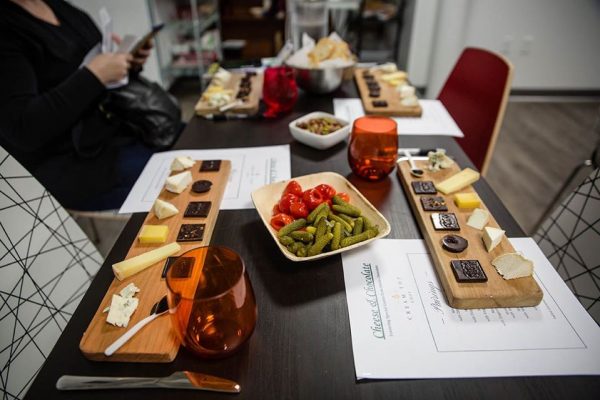 Over the last year or so, the latest phase of terrific Zingerman’s teaching and learning has been unfolding at the Creamery. Each month we add more classes because the enthusiastic response to the sessions has been so positive. Between the now nationally-renowned BAKE! a few hundred feet to the north, and the internationally acknowledged ZingTrain across the road, I’m starting to think that, with a nod to U of M, we might start casually calling Zingerman’s Southside “South Campus.”
In any case, the Creamery crew have been teaching some terrific classes—evenings, weekends, you name it! They’re a wonderful way to treat your significant other, organize a date, create a family outing, entertain out of town friends.
See the class list and sign up today.
Balsamela: The Sensational Secret Vinegar of the Modena Region
The next big thing in the food world is on the shelves at Zingerman’s Deli
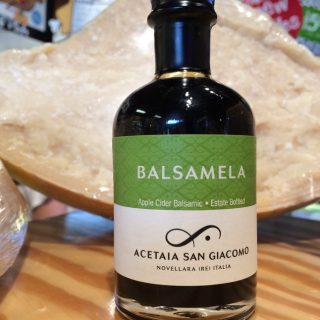
When we opened Zingerman’s Deli back in 1982, balsamic vinegar was almost completely unheard of in the US. In fact, it was still barely known even in Italy outside its home region—although it’s been made for centuries, it was mostly exchanged in the form of gifts, dowries, and the like, but was never sold publicly until relatively modern times. Today, of course, it’s only slightly less famous than Bob Dylan or the Beatles. But I’m going to brush past balsamic in order to tell you about another vinegar, one that comes from the same region, but that’s still a serious bit of a secret.
Listen up y’all. Although I’m not at all big on trends, today we’re going to start one. Ready? Here we go—Balsamela is going to be BIG!
What is it? Basically, Balsamela is a nicely aged, viscous, super-flavorful first cousin to traditional Balsamico; a lovely and loving, dense bit of sweet-sour vinegar made from apples. Is it good? Oh yeah! Seriously, sensationally excellent. Everyone I’ve given a taste to opens their eyes wide and responds with something along the lines of “wow”!
The dense, syrupy vinegar has been traditional in Italy in the same regions that have become famous for making Aceto Balsamico—Modena, Reggio, and Emilia—for a few hundred years. Balsamela was made when, and/or where, there were no grapes; someone decided to use apples. The “mela” means apple in Italian. It was originally called “Balsamico di Mela”—or apple balsamic. Whoever it was that came up with it, it was an experiment that yielded some superb, if still pretty much secret in the rest of the world, outcomes!
The Balsamela we get comes from Andrea Bezzecchi, who makes some really marvelous vinegar in the region (check out his rose vinegar, beer vinegar, red wine vinegar . . . all are excellent!). Andrea works with apples that come from farmer friends in the Alto Adige region, up in Italy’s northeast corner. They’re organic, biodynamic, and tasty. The fresh apples are pressed to make the must—apple juice that’s cooked down for many hours to concentrate it to a 50-60% reduction of its original volume. Already-aged vinegar is then blended in. It plays the same role as a sourdough would in baking, introducing the bacteria needed to convert the raw material into something magical. Unlike balsamic, the Balsamela is aged in stainless steel or glass—the wood would overwhelm its delicacy.
The end result is very much like a traditional balsamic vinegar, but in some ways I actually like it better. Super dense, lovely, sweet but not too sweet (a bit less sweet than balsamic), sour, tongue-jinglingly terrific.
What do you do with Balsamela? Everything! It’s great on handmade cream cheese or goat cream cheese from Zingerman’s Creamery. Fantastic drizzled onto feta. Superb on scallops or salmon. Great on salads of all sorts. Andrea has been putting it on ribs—sounds really good to me! Really anything you’d do with a balsamic you can do with Balsamela. Add a few drops to a tomato sauce. In the regions of Reggio and Emilia, one of the best-known ways to use Aceto Balsamico Tradizionale is to put a drop or two on an omelet, and Balsamela works well there, too.
Available at Zingerman’s Deli (order online for local pick up or delivery!).
Beautiful Black Currant Vinegar from the Mountains of Northern Italy
Carefully crafted by one of Italian vinegar’s “best friends”
If you’re looking for a really great vinegar to bring some brightness to your everyday salad eating, this one could be it. Tart, only subtly sweet, complex, compelling. It’s made by a couple of cutting-edge craftsmen who are helping to take Italian vinegar to new—actually, I should say, to old—levels of excellence. Fiorentino Pojer and Marco Sandri started making vinegar in the Trentino region of Italy in the mid-‘70s. As they say on their website, “…two young people, two hectares, few resources, some ideas, a lot of courage, a dream.” Every vinegar from this dynamic Italian duo that I’ve tried has been terrific. The white wine, red wine, cherry. All are excellent. This new arrival is just as good!
It’s no accident that the Pojer e Sandri vinegars are so special. While most fruit vinegars on the market are made much more quickly by simply adding fruit syrup or extract to sweeten and color otherwise unremarkable vinegar, the partners at Pojer e Sandri use only fresh fruit. This one is, by contrast, completely black-currant-wine vinegar—naturally fermented black currant wine, allowed to pass through all the way into vinegar (the natural conclusion of the winemaking process). To make it, they collect fresh black currants from neighboring farms high up in the Martello Valley, at altitudes ranging from 3000 to 10,000 feet above sea level. The fresh fruit is gently pressed, and its juice is inoculated with yeast to and then allowed to naturally ferment. Later it’s moved to big oak barrels with some “mother” vinegar and aged for 18 to 24 months. It is exceptional.
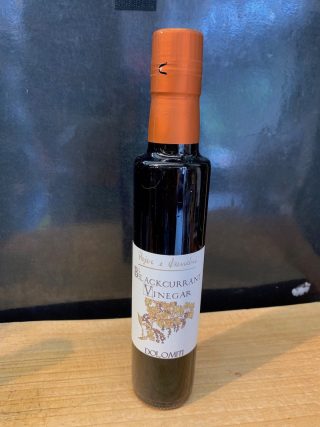
What do you do with black currant vinegar this special? Salads for sure. Just fresh lettuces from the farmer’s market with a bit of good olive oil, some sea salt, freshly ground black pepper and a bit of black currant vinegar is super simple but amazingly tasty. Beyond that, I keep thinking about deglazing scallops with it. It’d make a great vinaigrette for anything—tomato salad, chef’s salad, you name it. Mix it with some sparkling water and you’ll have a really tasty and super refreshing beverage! While Balsamic, sherry and apple cider are far better known, this little-known gem from the mountains of northeast Italy just might be better, or at least equally excellent. As you can tell, I’ve been seriously smitten.
Available at Zingerman’s Deli!
Wild Thyme Flowers from Daphnis and Chloe
A beautiful bouquet to bring your kitchen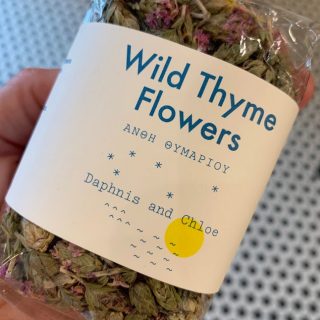
Lovely little handpicked wild thyme flowers that come all the way from the Greek countryside—I guarantee that your cooking and your kitchen will benefit from their peaceful and positive presence! As will you! If you work hard to appreciate every minute of every day, if you’re working to bring beauty into as many settings as you can, then these little wild thyme blossoms can make all the difference.
Little purple-tipped buds that have been carefully clipped from the dry, rocky (the better for the flavor of the herbs which have to fight to survive in such adverse conditions) hills in the countryside. The aroma? Amazing. The flavor? Fine. Floral for sure. Subtly sweet. Happily herbal.
To use this special thyme, simply rub a bud, or four, between your fingers. Be sure to hold your hand up to your nose as soon as you have—the smell transports me back to the Greek countryside. Add some to roasted . . . anything—vegetables, lamb, chicken, fish, pork, new potatoes. All you really need is some good olive oil. A small bit of garlic, paired with parsley, rosemary or sage. Great on a salad or in a tomato sauce, too.
The thyme blossoms come to us from the women at Daphnis and Chloe. I love everything they do, and the wild thyme is no exception. Evangelia Koutsovoulou, who founded Daphnis and Chloe, explained, “I started my business because I came across this question: Why were certain herbs from my childhood so much better than what I can buy now?” Her drive to answer that question has made it possible for all of us to enjoy and appreciate the flavors of the Greek countryside right here in Ann Arbor. Try this thyme, take a minute to appreciate the little things, the great people, the fantastic food that life gives us. I feel very fortunate to know them and to be able to share them all with you.
Available at Zingerman’s Deli!
Saragolla Pasta from Rustichella
An amazing new arrival made from an ancient wheat
As you probably know, I’m a big pasta person. We eat pasta at our house three or four (or sometimes five or six) times a week! Great artisan pasta like this Saragolla is one of the most wonderful and affordable luxuries in the world. For a few extra dollars, one can go from C+ commercial, reasonable-for-mass-market, pasta, all the way up to A+, artisan, and, in the process, take the quality of your evening meal from kind-of-OK to outstanding!
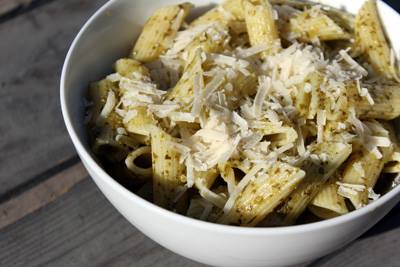 This recent offering from the Abruzzo on Italy’s east coast has me very excited! Here’s what friend and importer Rolando Beramendi wrote me when I asked about it: “I love the Saragolla pasta because you can really taste the quality of the FRESH wheat. You can experience that ancient wheat that was cultivated two hundred years ago in the Kingdom of the Two Sicilies (1815-60).
I think the fact that this is a semola semi-integrale (i.e., semi-whole wheat) makes it so tasty, because it’s not whole wheat and not modern overly-sifted durum wheat. That, in itself, gives it a great taste. It’s so nutty, so grainy and it tastes like a really good bread, the kind made nowadays by really good spots like yours at Zingerman’s Bakehouse! It’s all about the grain! And the craftsmanship of Rustichella d’Abruzzo makes it so fun to eat. You chew and bite, yet it’s not as al dente as the regular pasta. I find it soft and supple, but you still have to chew it a lot… it’s so great! I always eat it with just good olive oil, garlic, and pepperoncino! So that way, it’s simple and you can taste the flavor of the pasta!”
As Rolando said, this is very much what the flavor of the wheat would have been ages ago, what Frank Carollo’s (co-managing partner at Zingerman’s Bakehouse) ancestors would have been using for supper back in Sicily. In the middle of the 19th century, Saragallo was one of the premier pasta grains in Italy. But like so many now heirloom grains, Saragolla’s heyday slowly came to an end when commercial pasta making demanded more consistent grain and higher yields. In an effort to protect this ancient grain from extinction, it’s been put on the Slow Food Ark of Taste. And of course one of the best things we can do to help make that happen is to eat it!
The pasta has a light brown color and a notable nuttiness that’s really quite lovely. As Rolando said, it’s really good just with a big olive oil like the Il Tondo oil from Sicily, red pepper flakes, and garlic. Also excellent for a pasta ala Gricia (the recipe for which is in Zingerman’s Guide to Better Bacon).
Available at Zingerman’s Deli.
Mancini; Farmstead pasta from the Italian Marche Region
A pasta star is born!
 I’m loyal. To a fault. I’ve probably stuck with people and projects longer than maybe I should have but . . . a lot of good things come from that loyalty. Relationships that looked they were headed for the rocks but later turned into something terrific. Products that seemed great but took a long time to finally take off. I still root for Chicago sports teams even though I’ve been a Michigander for over 2/3 of my life and haven’t actually watched a game in ages!
So before I get started here, let me state for the culinary record—I remain very, very loyal to all the artisan pasta producers that I love, and have loved for twenty or thirty years now.
Martelli is magic; Rustichella rocks; Cavalieri is killer; Gentile is a jewel. I eat them all with great regularity and will definitely continue to do so. But the beauty of brand loyalties, I guess, is that it’s not a zero-sum game. I don’t have to be loyal to just one. Which is why, loyalty acknowledged, I can loudly sing the praises of Pasta Mancini.
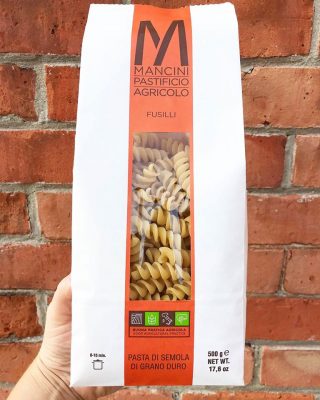
Located in the Marche region, about halfway from Italy’s east coast, Mancini is exceptional because it’s a farmstead pasta—the only one I’m aware of. That means they grow the wheat they use on their own farm. Maestà, Nazareno, and Levante are the three varietals. The family has been farming for three generations, but about ten years ago they built a Pastificio right in the middle of the wheat fields! The design of the building was done, effectively I think, to be in harmony with the surrounding fields. One day, I’m sure, I’ll visit. Or maybe we’ll have a Zingerman’s Food Tour that goes there! In the meantime, I’ll be cooking some of their pasta and enjoying it at home right here in Ann Arbor.
All the same important techniques that the other classic producers I listed above also use—low-temperature mixing; bronze die extrusion (properly made pasta should have a very rough surface); long slow drying (48 hours for the long cuts). As with all the others, the aromas of the grain will fill your kitchen while you’re cooking, and the perfume of the pasta will peak if you pour out the pasta water (be sure to use a bit of it to thicken your sauce first). The palate-catching quality particulars that make Mancini so good, must, I have to believe, be the quality and types of wheat they’re growing and then skills and styles of their milling and making procedures. The pasta really is fantastic. Great chewy texture (be sure to cook very al dente) and great flavor. Remember, with all artisan pasta, the pasta itself, not the sauce, is supposed to be the star of your supper.
One other indicator of pasta excellence: taste it a day or two after you cooked it, cold. Industrial pasta will have all the appeal of soggy commercial white bread. Great artisan pasta, on the other hand, will taste like a bit of well-made sourdough bread. Mancini passed the test with flying colors. The other evening, I made a simple pasta sauced with ricotta and black pepper (the ricotta prep for the salad also makes a marvelous sauce for pasta—just thin it a touch with some of the pasta cooking water and finish the dish with plenty of freshly grated Parmigiano Reggiano). We didn’t finish everything I made, so I stuck the leftovers in the fridge. It was late and I was being lazy, so I didn’t even cover the bowl. The next day while we were cooking I decided I’d go back and taste test. I wasn’t hugely hungry—really just curious. But the cold, already cooked Mancini was so good, I ended up eating the leftovers, one piece of pasta after another, with my fingers out of the refrigerator. While that may not mean that much to most people, I will tell you it’s a highly unusual thing for me to do! A sign, again, that this newly arrived farmstead Mancini pasta is seriously fine stuff!
We have four shapes on hand to get going—maniche, fusilli, pennette, and spaghettini—but I’m sure more will appear on our shelves in the months and years to come!
Available at Zingerman’s Deli.
TO CONQUER THOSE COLD, GREY MORNINGS
Holiday Blend from the Coffee Company
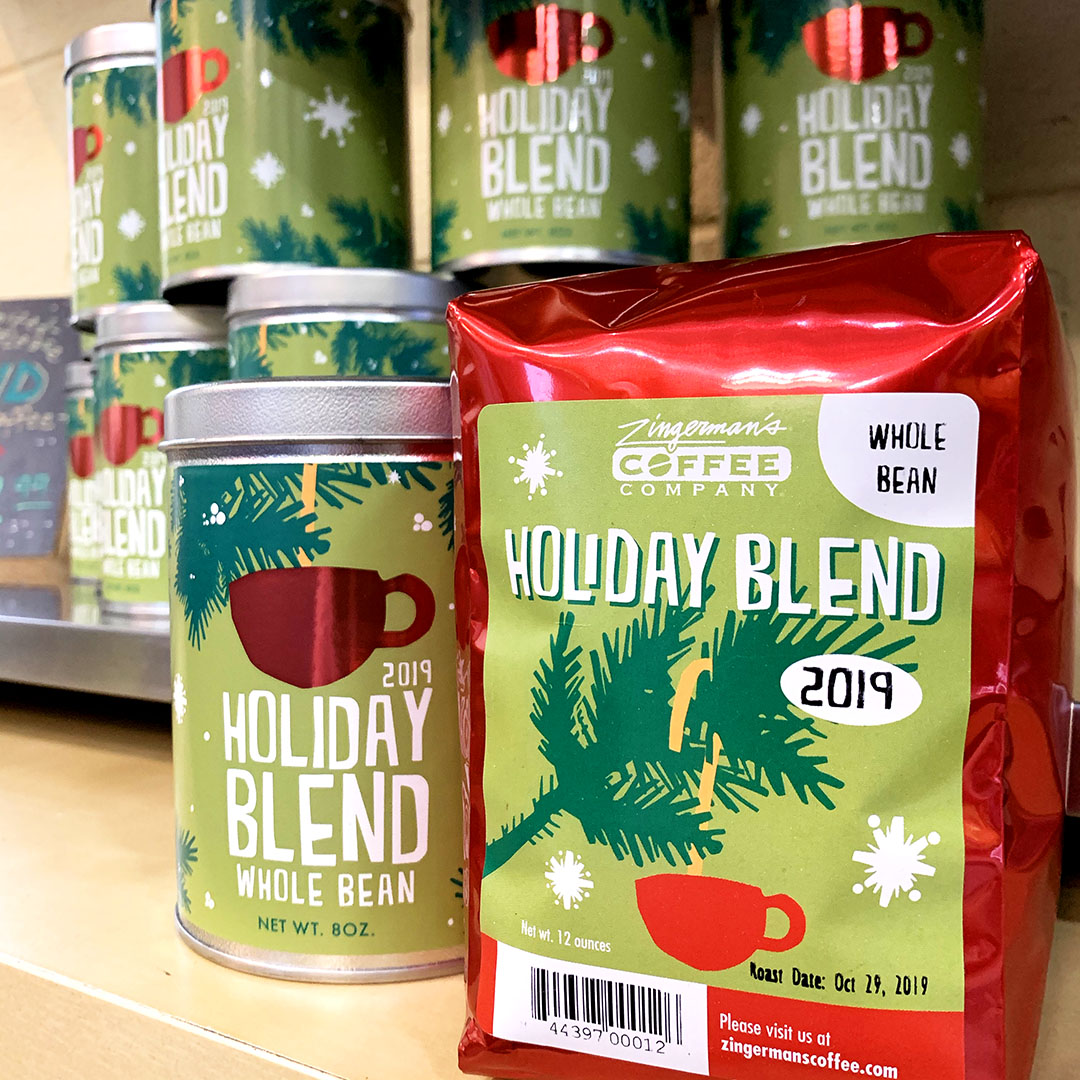
A beautiful brew that can turn any day into a holiday!
If you’re thinking about what to drink when you dive into a nice bite of pecan pie, this limited- availability seasonal brew from Zingerman’s Coffee Company could just be the trick. We’ve been doing an annual Holiday Blend for over a decade now, but I’m pretty sure that the 2019 vintage is the best one yet!
I asked Matthew Bodary, the man behind this year’s blend, for some background: “When we developed this year’s Holiday Blend, we paired two of our favorite estate coffees from Costa Rica and Brazil with beans from smallholders near Antigua, Guatemala. We always try to make the Holiday Blend balanced and super smooth, and the Guatemalan brings a nice silkiness to the cup. It’s rich and layered with hints of cocoa.”
We’ve been working with Brazil’s Daterra Estate since our early days. More than 10 years later, they are still producing some of the finest coffees we have ever tasted. The mix of natural and pulped-natural beans from Daterra contributes to the smooth, velvety body of the blend and adds a nice cocoa-like quality.
The Costa Rica component, which adds natural sweetness and a caramel-like note, comes from our friends at Hacienda Miramonte. Started in 1917 by the matriarch of the Gurdian family, Lucila Duval de Morales, it is now operated by her great-grandson, Ricardo. We rounded out the blend with Guatemalan beans from smallholders in Guatemala’s Antigua Valley. The coffee has a balanced, silky, subtly fruity profile that is classic for high-grown Guatemalans, and it adds another dimension of complexity to this blend.
We think the Holiday Blend is the kind of coffee you can drink day or night, for breakfast or dessert, indoors or outdoors, with family and friends, or just by itself, as you sit fireside, wrapped in a blanket. You and your coffee, comfort, and joy.
Available through Christmas, then it’s gone till next year. Get it at Zingerman’s Coffee Company, Next Door Cafe, Roadhouse, and Mail Order!
Bakehouse Babka is Back in Town!
Lots of Dark Chocolate and A Splash of Cinnamon in A Traditional Jewish Sweet Bread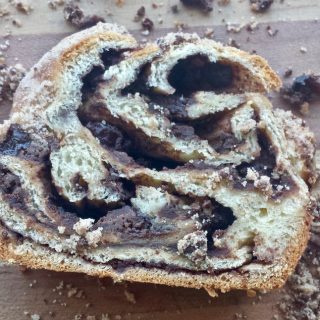
If you’re not familiar with it, babka is traditional Jewish “sweet bread,” akin, you could say, to a light-textured coffee cake, or maybe a bit denser piece of Italian panettone. It starts with a rich, slow-rise brioche dough made with lots of butter, real vanilla, and fresh egg yolks. That, in turn, is sprinkled with chocolate “crumble” and orange-syrup-soaked raisins, all of which get formed into a fine looking loaf, and then baked off to a golden brown with a scrumptious cinnamon-sugar crust. The Bakehouse crew add a good dose of dark chocolate on top as well as rolled into the middle. To say that people love this stuff would be an understatement. It’s already got a lot of loyal fans, and it seems to be gaining more momentum all the time.
If you’re eating alone, try warming a single slice in the oven for a few minutes, then enjoy it with a cup of strong coffee. I know that inexpensive babka abounds in the food shops of NY, but I’ve tried about twenty different brands, and, although it’s just my opinion, none of them came close to the flavor of the one the Bakehouse has put together. And if you don’t believe me, you can take it from Susana Trilling, author of the excellent cookbook, Seasons of the Heart, and creator and cooking teacher extraordinaire of the Oaxacan cooking school (also known as Seasons of the Heart) who grew up on the East Coast and used to run restaurants in NYC. She wrote me to say that, “. . . bar none, Zingerman’s Bakehouse makes the BEST Babka I have ever eaten!! It was incredible.”
Available Wednesdays, Fridays and Sundays at Zingerman’s Bakeshop, Deli, Roadhouse or online.
Cream of Freshly Milled Wheat
A wonderful way to get your morning going
Porridge is hardly new news. It’s been eaten since shortly after humans figured out how to make fire, and determined not long after that, long cooking of grains could make a pretty filling and fine meal.
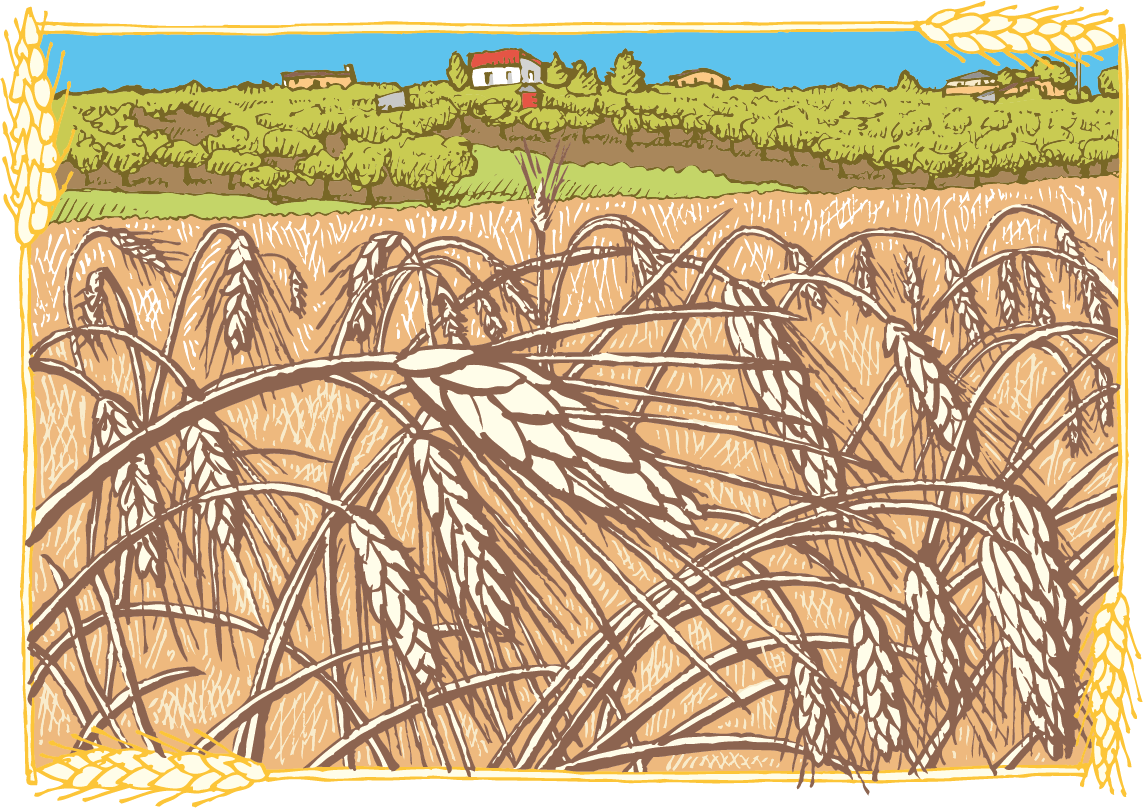
What is new, though, is that, as part of our work to delve ever more deeply into the magical benefits of fresh milling, we’re now offering some crazy good cream of freshly milled wheat every morning in the Bakeshop. With all due respect to the commercial version, developed in the late 19th century in North Dakota (where long and cold winter days would clearly have been conducive to starting one’s day with a hot filling bowl of porridge), what Zingerman’s Bakehouse is cooking up is really something special.
Lee Vedder, who works at the Bakehouse and loves history as much as I do, wrote a great piece about it for the Bakehouse blog. In the late 19th century, culinary fashion, she shared, turned to “farina, a form of milled wheat made from the germ and endosperm of the grain, which is milled to a fine consistency and then sifted. The porridge, branded Cream of Wheat in 1893, was created by a group of enterprising millers based, initially, in Grand Forks, North Dakota and, eventually, in Minneapolis, Minnesota. 1893 . . . saw Cream of Wheat making its manufacturing debut, to great popular fanfare, at the World’s Columbian Exposition in Chicago.” Coming into the present, Lee adds, “Now that we’re milling some of our own wheat at the Bakehouse, we decided to see what freshly milled whole grain (FMWG) cream of wheat tasted like. It’s as comforting as the red box version and more flavorful because it contains the entire wheat berry. We are using coarsely milled, soft white wheat from Ferris Organic Farm in Eaton Rapids, MI and cooking it with local Guernsey Dairy milk. Come in and try some with muscovado brown sugar and a splash of milk or cream.”
While we probably won’t be setting up an exhibit at a World’s Fair any time soon, the initial response to the Bakehouse Cream of Freshly-Milled Wheat has been exceptionally enthusiastic. It’s not hard to understand. As co-managing partner of the Bakehouse, Amy Emberling asks, “Where can you get whole grain, freshly milled cream of wheat? It’s very mellow tasting, quite comforting.”
Come by the Bakeshop on Plaza Drive any time after 7 in the morning (until it’s gone) and grab a bowl!
FOR THE ADVENTURER
Take a Zingerman’s Food Tour to Tuscany
The gift of a lifetime
The amazing Russian poet Anna Akhmatova once wrote that, “Italy is a dream that keeps returning for the rest of your life.” She went there first in 1912, then again over half a century later, in 1964. While Akhmatova has left the world as we know it, it has been a bit over a half-century since her last visit. Maybe it’s the moment to follow in her poetic footsteps and travel to the land of incredible food, beautiful art, passionate people, and magical moments.
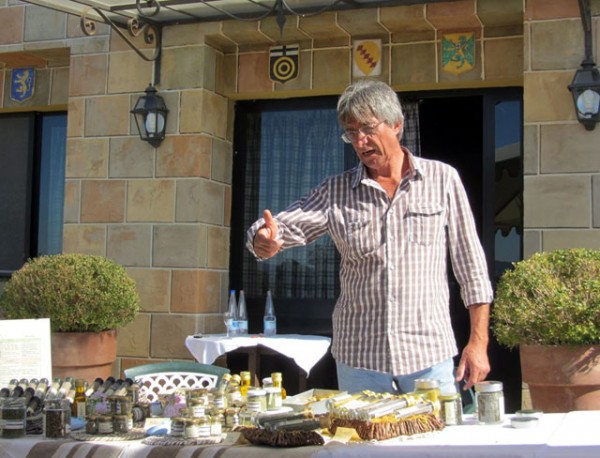
If you’re ready to treat yourself to something way beyond special, then consider joining the terrific Zingerman’s Food TourⓇ to Tuscany. It’s one seriously wonderful week of world-class eating in Italy’s most talked about region!
What’s it about? Here’s what Kristie Brablec, the one-of-a-kind managing partner of Zingerman’s Food Tours® had to say: “Come along and visit Tuscany and Emilia Romagna the Zingerman’s way. We’ll go behind the scenes and visit traditional small producers of some of the region’s finest foods – from the massive wheels of Parmigiano Reggiano, to the beautiful, small bottles of real balsamic vinegar, from Chianti Classico wines and artisanal olive oil to the melt-in-your-mouth prosciutto di Parma. We’ll roll up our sleeves and enjoy Tuscan cooking lessons in a 15th-century villa in the rolling hills outside of Florence. Together with Peggy Markel, long-time culinary adventurer and food guide, we will experience the wonderful food, culture, and landscape of Tuscany.”
What do you do on a Zingerman’s Food Tour? Imagine that a dozen and a half (or so) food lovers at the Deli were snatched up by a spaceship and transported halfway around the world to continue the amazing eating and learning they’d been enjoying in Ann Arbor, only this time in the Italian countryside!
Once you’re there, instead of just hearing about the people who make the artisan food we sell so much, you get to walk into their h
ouses and meet them, hear stories straight from the source, taste the food in ways they prefer to prepare it. It’s a week’s worth of insider insights into what makes some of the best food in the world so wonderfully special. Experience amazing meals, visits to some picturesque Tuscan hill towns, cooking lessons from local chefs, some lovely vistas and marvelous market visits. If the weather and nature cooperate, you could be on Tuscan ground for the start of next autumn’s olive harvest.
The tour is nearly a year out, so you’ve got time to get it together to take off for Tuscany. There are only 7 seats left for this tour. Make a couple of them yours before they’re all gone. Olive oil, art, pasta and poetry, cooking and culture. A week that will stay with you, as Akhmatova said, for the rest of your life.
See zingermansfoodtours.com for details!

Zingerman’s Bakehouse
The amazing cookbook from the Bakehouse!
Bread, baked goods and a marvelous book all in one! 25 years of hard work, baking, and business acumen come together in this terrific tome written by Bakehouse managing partners Amy Emberling and Frank Carollo.
NPR said: “There are plenty of cookbooks that delight the eyes with beautiful photography, but the new self-titled cookbook from Zingerman’s Bakehouse (and the first proper cookbook from the lauded Zingerman’s 10 businesses) in Ann Arbor, Mich., is not a coffee table book. Written by bakery co-owners Amy Emberling and Frank Carollo, the book does have some mouth-watering images, but its real appeal lies in the no-nonsense recipes that seem like they’re just an oven-preheat away from appearing warm and fresh in your kitchen.”
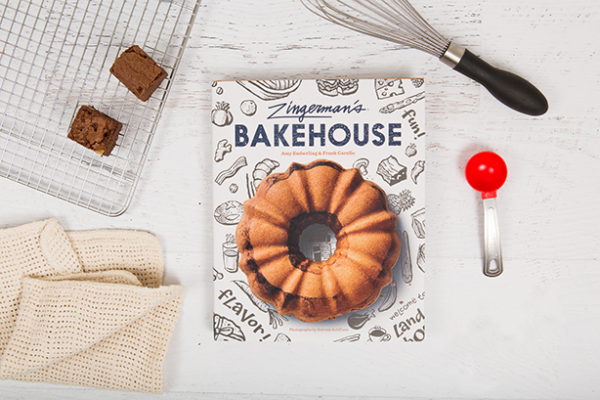
A great gift for anyone who likes to bake! Better still, package up a copy of the book in the current issue of Zingerman’s News, add some bread, some pastries, and even better still, a gift certificate to BAKE!, our nationally acclaimed school for home bakers, in a box and send it off to a baker you care about. Guaranteed to make the day of anyone you love who loves great baking!
At Zingerman’s Bakeshop, Deli, Roadhouse, Coffee Company or online!
A new pamphlet release from Zingerman’s Press!

Going into Business with Emma Goldman” on the 150th anniversary of her birth
18 intriguing and insightful lessons for business and life from America’s most famous anarchist.
An original essay by Zingerman’s co-founding partner, Ari Weinzweig.
Available at the Roadhouse, Deli, Coffee Company or online at zingtrain.com
Bottom-Line Training® Trainer’s Toolkit

By ZingTrain’s co-managing partner, Maggie Bayless
An interactive, online handbook for anyone who’s charged with doing, and/or leading training work in their organization. 25 years of hands-on, down-to-earth, eminently practical and incredibly helpful tips on training from one of the country’s leading innovators in the world of training!
Available online at zingtrain.com
The Art of Business

Maybe art is the answer?
What would happen if everyone approached their lives as artists? Put together their communication as if they were poets? Designed their spaces—small and large—as if they were architects? Listened to others like a musician? What if business leaders looked at their organizations as if they were making art for the ages instead of being just vehicles for making money? What if everyone—not just those who society calls “creatives”—is capable of turning what they do every day into amazing art?
This special pamphlet features a special letterpressed cover by Michael Coughlin and illustration by Ian Nagy, based on the art of Patrick-Earl Barnes.
Available at Zingerman’s Coffee Company, Roadhouse, Deli or ZingTrain.
FOR THE SAVORY SWEETHEART
Kimchi Fried Rice at Miss Kim
A turn of the last century Korean specialty shows up in Kerrytown
One of the most popular dishes on the Miss Kim winter dinner menu, Ji Hye’s Kimchi Fried Rice, is winning more and more fans with each passing week! Since I clearly didn’t grow up with it, I turned to Ji Hye, partner, chef at Miss Kim and increasingly one of this country’s leading experts in Korean culinary history.
“Basically,” she began, “any time you go to a Korean BBQ place, or a Korean stew place, you can get fried rice after the main part of the meal. It’s almost like a final course, before dessert.” In a sense, I realized, it plays the same role as a cheese course might play in France—still savory but something that starts to lighten the meal as you head towards something sweet to finish your evening. “You fill up on meat,” Ji Hye said, “and then you have fried rice. Generally, you add the rice to your cooking pan to get any flavor or drippings that were left behind. Here at Miss Kim, we turned it into our own version of the dish by adding our moo radish kimchi, because we like the crunchy texture. We add soy butter rice for richness. And then the secret is lots and lots and lots of toasted seaweed, which has that great umami flavor. You can make a meal out of the Kimchi Fried Rice, or you can have it along with an entrée.”
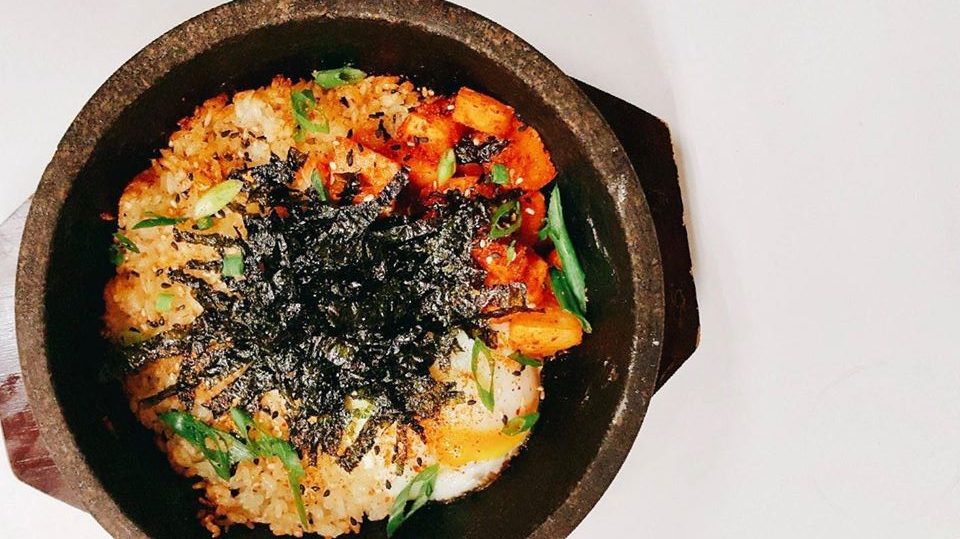
Aside from the fact that it’s so terrifically tasty, the dish has an interesting history behind it. Ji Hye explained: “The story is that fried rice wasn’t really introduced into Korean cuisine until the early 20th century. Back then people frying was rare in Korean cooking because oils were expensive. Mostly food was boiled, steamed or grilled.” So it started as an exotic import? “Yeah. The turn of the last century was a really interesting period in Korea. It was known as the ‘Hermit Kingdom.’ There was very little trading with the outside world. Korea was not open to the U.S. or to Europe. It’s only in the late 19th and early 20th century when the Japanese invasion starts and there’s a foreign influence that starts coming in. Today, Korean people have fully embraced it as Korean, but only a century ago people thought of it as a Chinese dish. I like that—when you go deep in the history and you see the story of the food and the people. And Korean people started to make it their own by adding kimchi to it. Which is great because the kimchi has good acidity. So it’s even more interesting, I think, than regular fried rice.”
The Kimchi Fried Rice Ji Hye has come up with is a fantastic main course, and also a fine side dish to share with others at the table. As Ji Hye explained, “We don’t have tabletop grills here, but we do have hot stone bowls that we use for bibimbob. So our fried rice comes out crisp in as stone bowl with a soft egg for you to stir in and let cook.” Hot, spicy, filling, and comforting. Whether you’re dining alone at the counter or coming in with a bunch of friends on a Friday night, the Kimchi Fried Rice is a wonderful way to eat every day of the week!
Make a dinner reservation at Miss Kim!
Zingerman’s Creamery’s Traditional Cream Cheese
Celebrating two decades since the return of handmade cream cheese
As part of the two-day ZingTrain Managing Ourselves seminar, we do a 45-minute session of comparative tasting of a Zingerman’s product and then a “comparable” commercial one, side by side. The idea is to help enhance mindfulness and awareness of otherwise ignored details in the belief that we’ve held since day one in 1982—that you really can taste the difference! This time around, we did the comparison with Zzang!® candy bars, baguettes from the Bakehouse, coffee from the Coffee Company, and Cream Cheese from the Creamery. The difference between the artisan and the commercial, mass-market offering, in all four instances, was massive. But the one that almost all the attendees remarked on most was the cream cheese. They were shocked by the difference. I can see why! Even though I’ve loved what we make for twenty years now, I still forget just how much difference there is. Once you get used to the real thing—cream cheese the way it was made 150 years ago—it’s hard to go back to the industrial.
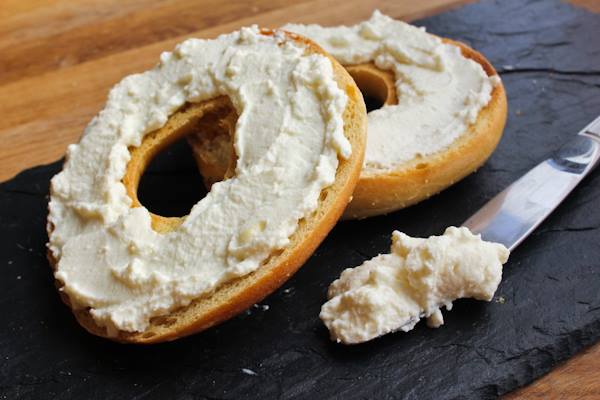 Cream cheese was the first product we made at Zingerman’s Creamery 20 years ago. When we were having initial discussions, it dawned on me that although at the time (the late 90s) we’d made major improvements to so many of the core ingredients we used every day at the Deli, we were still using the same commercial cream cheese that we’d had since we opened in 1982. In fact, it was basically a commercial version of the same thing I’d grown up with from the supermarket. The more I thought about it, the incongruity started to really kill me. And that’s how Zingerman’s Traditional Cream Cheese came to be.
Recipes for cream cheese can be found in U.S. cookbooks and newspapers beginning in the mid-18th century. Cream cheese was produced on family farms throughout the country, so quantities made and distributed were typically small. The production process of traditional cream cheese the way we do it at the Creamery is pretty simple. Newly arrived milk is gently pasteurized, then poured into a cheese vat where (vegetarian) rennet and active cultures are added to begin flavor development and set up the curd. After a few hours, the newly formed, soft-textured curd is hand-cut with stainless steel knives, then hand-ladled into cloth bags where gravity drains off excess moisture for six or seven hours. After draining, some sea salt and cream are added and carefully mixed into the soft curd.
What do you do with this super delicious old school cheese? Obviously you can put it on the Bakehouse’s terrific bagels. On Tuesdays, Saturdays, and Sundays, you can put it on a bialy, too! Spread it on sandwiches or stick in an omelet. Really great on the Bakehouse Jewish rye or equally so on the Roadhouse bread. It’s wonderful at parties topped with jam, marmalade, or honey. Bake with it. Eat it with a spoon. It’s all good! If you feel like having some fun, you can make the 1950s classic, “ants on a log”—celery sticks stuffed with cream cheese and topped with raisins.
At Zingerman’s Deli, Cream Top Shop, or Mail Order.
Walnut Sage Bread from the Bakehouse
A beautiful new bread made with freshly milled grain
This new offering, Walnut Sage Bread, from Zingerman’s Bakehouse is so superb I can barely stop eating it! Everything about it, I think, is excellent! Start with the grain— we use freshly milled Hard Red Spring wheat and the super-flavorful, ancient Emmer wheat (the ancestor of the modern durum wheat, if you will)—both grown in the Leelanau Peninsula. In an effort to coax the full potential of the grain, we do a long and slow, overnight, natural fermentation of a very wet dough that is dyed purple thanks to the tannins from the skins of the walnuts. Then there’s the dark, devilish, delicious crust. The long bake means that caramelization of the natural sugars in the grain creates a toasty, subtly sweet flavor that holds its own with the boldness of the freshly milled grains. On top of which, I love walnuts in bread! It’s just such a great combo—the walnuts get toasted in a terrific way while they’re in the oven. Oh yeah, we don’t want to forget the Greek sage leaves—they’re subtle, way back in the mix, but bring an aromatic depth to the loaf that I really like. The whole thing comes together in the form of an earthy, toasty, wheaty loaf!
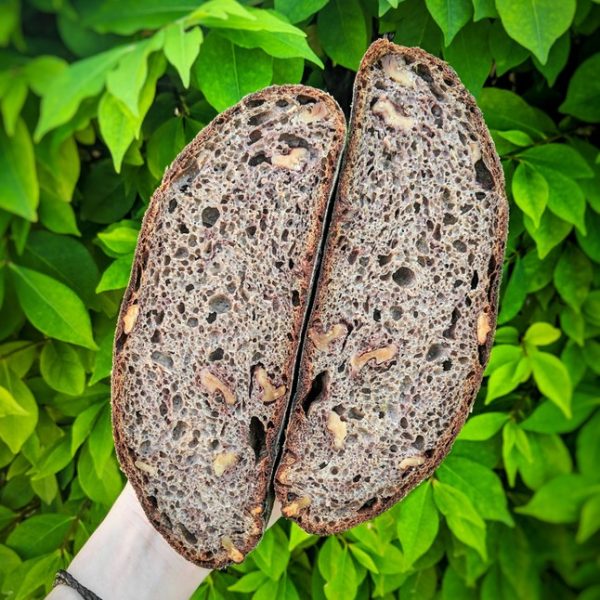
What do you do with the new Walnut Sage bread? Well, obviously, you could just sit down and eat it! That’s how I got started—rip off a chunk and have at it! Great with fresh goat cheese from Zingerman’s Creamery. A slice of this Walnut Sage bread, toasted and spread with the fresh handmade cream cheese from the Creamery is almost too cool for school/too good to be true. When you toast it, the aromas from the grain fill the room. If you want to go on the sweeter side, try it with the Creamery Cream Cheese and some dark honey—maybe the chestnut. Makes great crunchy croutons. Try it with the Lex’s Chicken recipe that’s in Zingerman’s Guide to Good Eating—it’s a great holiday meal!
You can buy the bread at the Bakehouse, Deli or Roadhouse.
New and Improved Vollkornbrot from the Bakehouse
Killer combo with the Creamery’s Cream Cheese
The Zingerman’s Bakehouse Grain Commission project—the undertaking of on-site milling of grains at the Bakehouse this year—has been one of the most inspiring improvements we’ve made in the last year! The difference in flavor in the breads and pastries that use the fresh-milled grain has been remarkable—what was already really great has become amazing. You can taste the difference in the Country Miche, Margaret’s Sweet Wheat, our rye breads, the Roadhouse bread, the Funky Chunky Chocolate cookies, the Michigan Double Chocolate Cookies . . . have all gotten even better by being made exclusively, or at least partially, with grain milled right at the Bakehouse.
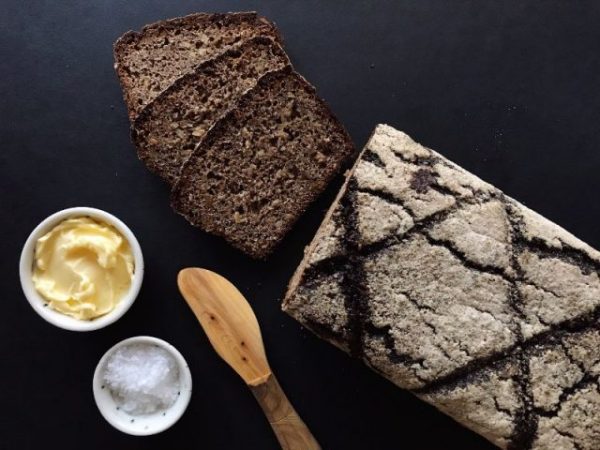
The German Vollkornbrot is now at the top of that list. As baker Hazem Tugun writes, “part of the Zingerman’s ethos is ‘constant improvement,’ and we believed this bread could be revised to have improved flavor and texture.” The new and improved Vollkornbrot (which, in German, means simply “whole grain bread”) is made using organic rye that we’re getting from Breslin Farms in Ottawa, Illinois. Ottawa, if you don’t know the town, is about a ninety-minute drive southwest from Chicago. Back in the mid-19th century, it was an important stop on the Underground Railroad, and the site of the first Lincoln-Douglas debate during the 1858 Illinois Senatorial campaign.
More in the moment, Breslin Farms does all kinds of great things—it’s family-owned, organic, focused on biodiversity, grows for flavor, and is committed to helping create a healthy local ecosystem. (If you’re interested in any or all of that, they have a great reading list on their website.) The Breslin’s whole rye is stone milled fresh out on Plaza Drive. The Bakehouse mixers take that fresh rye and start a sour from rye chops, sunflower seeds and more whole grain rye flour—the natural fermentation goes for at least 12 hours. As per German baking tradition, the crew waits 24 hours to allow the loaves to “cure” and set up after the newly-baked bread comes out of the ovens.
Vollkornbrot like this is one of the staples of every day German baking and eating. Dense, intense, full-flavored and delicious, sliced thinly to make for some marvelous eating. In Germany, bread like this is every day eating! Hailey Schurr at the Bakehouse says, “The flavors are fruity, earthy, maybe a bit spicy and sweet, almost wine-like, rounded out by a pleasant sour.” I’d agree. There’s a complexity, a fantastic depth of flavor that reminds me of roasted coffee, or even hints at the sorts of spiced Christmas breads that are so popular in Central Europe.
Great fresh sliced from the loaf, equally excellent toasted. My favorite thing, as per the subtitle above, is to spread thin slices of it with the Creamery’s handmade Cream Cheese. The dark deep flavors and dense texture of the bread are a perfect counterpoint to the light, creamy, soft spreadable artisan cream cheese. It’s also excellent with a thick layer of butter. Great for a ham sandwich, though I should make clear that’s a thin, German-style sandwich, not the sort of stuffed, Deli sandwiches we love so much. It’s superb with smoked salmon. If you like things a bit sweeter, try it with the Cream Cheese and maybe a bit of the Tunisian wild mulberry jam we have at the Deli from Moulins Mahjoub.
Available at the Bakeshop and Deli, or online at Mail Order.
Mussels with ‘Nduja at the Roadhouse
A sensationally superb take on surf and turf!
One of the most loved dishes on the Roadhouse menu is this terrific combo of ‘nduja—the amazing spicy, spreadable pork sausage of Calabria—cooked into the broth of fresh Maine Mussels. If you like seafood and you like spice, this is a dish you won’t want to miss!
Let me back up a bit though—if you don’t yet know ‘Nduja, and you like spice, you like pork, and you like good food . . . do NOT miss this spicy, slightly sweet, buttery, powerfully porky yet as smooth in texture spreadable salami in the style of Calabria. ‘Nduja is, almost inconceivably, both subtle and strong at the same time. I loved it when I first tried it, and I love it just as much six years later. We sell it by the pound at Zingerman’s Deli and the Cream Top Shop!
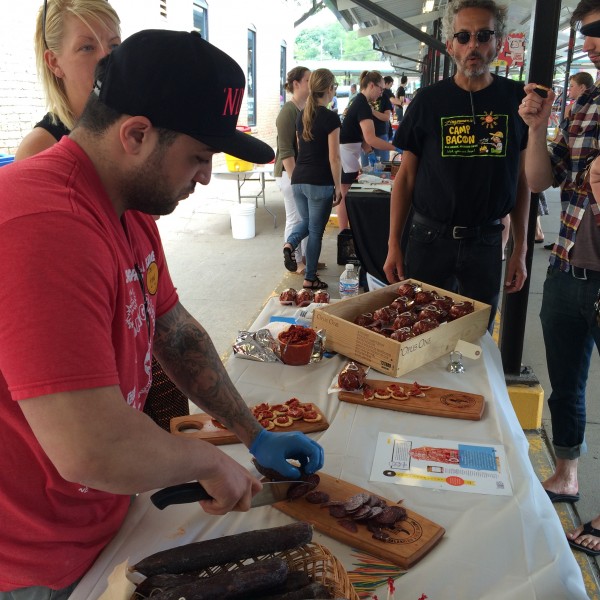
To get clear on the name, it’s pronounced “en-doo-yah.” In Calabria, ‘Nduja is everyday fare. It shows up everywhere there, but I’ve almost never seen it anywhere else, until our friend, Tony Fiasche started to make it in Chicago using his Calabrian grandfather’s recipe. It’s part of a little known in the States subset of the Italian salami world called “salami dal spalmare,” or “spreadable salamis.” It’s made by finely grinding pork fat and meat, seasoning it with lots of spicy Calabrian chiles, and then aging the paste in a casing. ‘Nduja is nothing short of great on almost anything you add it to—order it on a burger instead of bacon! The spicy richness of the pork contrasts pretty much perfectly with the rich beefiness of the hand-pattied burger. The oak smoke from the grill adds a bit of an extra enticement at the end. And the heat of the burger softens the ‘Nduja so it’s . . .. mmmm . . . terrifically tasty.
So, that’s the “turf.” And, the “surf”? Meaty, Maine mussels! We’ve long used—and loved—the super-premium raft-cultured mussels from the majestically pristine waters of Blue Hill Bay off of Hardwood Island, Maine. This island is located a couple miles west of Acadia National Park. Unlike most farmed rope mussels, the Blue Hill Bay mussels are essentially farmed in “seclusion,” so they aren’t fighting for nutrients and oxygen. The result is as plumper, plusher, meatier mussel that pairs pretty darned nicely with the porkiness of the ‘nduja!
When the two come together, you end up with a bowl of steaming hot, spicy seafood. Ask for extra bread to soak up the broth! You can also order them as a main course with a side of fries to make our local version of the Belgian Moules et Frites. If you have a bit of broth left, take it home with you and use it the next day a sauce for some pasta and top with some toasted breadcrumbs before you serve.
Available at Zingerman’s Roadhouse.
New Orleans Red Beans and Rice at the Roadhouse
The world-famous Camellia Red Beans appear in Ann Arbor

We’ve finally figured out what nearly everyone in New Orleans has known for ages. Camellia beans bring killer quality to the kitchen! No joke—you really can taste the difference. Back in the early 1980s when we opened Zingerman’s Deli, Camellia had already conquered the bean-loving city of New Orleans. Back then, nine out ten bags of beans bought in the city were Camellia.
Can there be that much difference in a bean? The simple answer is absolutely.
And why not? Beans are just as much an agricultural product as any other produce that comes out of the ground. And you wouldn’t even flinch if I told you that one variety of tomato was more flavorful than another. And the same is true for beans. Every taste test I can find online, and every conversation with culinary experts I know, all say the same thing: Camellia beans are creamier, tastier.
The Hayward family has become famous for buying well above the USDA’s highest for beans—their minimum is now known amongst Louisiana bean growers as the “Hayward Standard.” Alon Shaya, a good friend and great chef at his Sava restaurant in New Orleans and Safta in Denver, has spent much of his adult life cooking in NOLA. “In New Orleans, you eat red beans and rice on Mondays. It’s a tradition that goes back over 200 years. Our Monday night red beans and rice is a tradition at our home, cooked by my wife Emily, ‘the bean queen of New Orleans.’ It’s a tradition that we cherish and now can’t imagine living without. Emily is obsessed with only using Camellia, swearing that the beans just don’t taste right without them. I agree. We bring them with us all over country so we can get the real New Orleans flavor whenever a pot of beans are on.”
Long-time Roadhouse head chef Bob Bennett has been putting the Camellia beans to work by having Red Beans and Rice on the menu at the Roadhouse regularly. Those Camellia red beans, simmered with a mess of smoked pork and spices, then served with that incredible Carolina Gold rice we get from Anson Mills, is a menu favorite!
Make a reservation at Zingerman’s Roadhouse to try them yourself!
Salsa Pianogrillo
Sensational cherry tomato sauce from Sicily!
This super delicious Sicilian bottled cherry tomato sauce is truly remarkable! Irish philosopher John O’Donohue wrote that “Red is never neutral. When red is present, something is happening.” This sauce fits O’Donohue statement to a “T”. This simple bottle of beautifully red cherry tomato sauce from Sicily is very definitely happening!
The Pianogrillo “farmhouse” dates back five centuries—built first as a fort to defend the island. It’s located in the area around the ancient town of Ragusa.
Lorenzo Piccione di Pianogrillo, who leads the family’s work is a Renaissance man of the highest order. Aside from the farm work, he’s also a renowned pianist, an excellent painter, and a designer who’s done work for the famous modernist firm of Alessi. The Pianogrillo extra virgin olive oil is outstanding and I’m big, big fan of their estratto—the intense, dense, traditional dried-in-the-sun, tomato sauce that you can use a spoonful or two at a time to enhance pretty much any sauce or stew, or even just spread on bread.
This bottled sauce of super sweet Sicilian cherry tomatoes comes in a cute little bottle that looks like something you’d drink. Shake the sauce briefly in the bottle, then pop the lid with a bottle opener the way you would a cold beer. It’s ready to use as is. A bottle of this, along with a half-pound of Rustichella Saragallo pasta (or one of their other great offerings), some really good olive oil (try the Pianogrillo oil—also excellent!), and some Parmigiano Reggiano—dinner is served! You can also, I should add, drink it straight from the bottle—I’ve done it. And it makes an excellent Bloody Mary to boot!
Make a Big Hit at Your House with Hungarian Pimento Cheese
Liptauer Cheese from Zingerman’s Creamery
If you’re one of the thousands of folks who’ve fallen in love our pimento cheese over the last ten years, make a note for yourself to ask for a taste of this traditional Hungarian version next time you’re in the Cream Top Shop or the Deli. While Hungarians will know it as “Liptauer,” it could in a very practical sense, be seen as the Central European version of what we here know as Pimento Cheese—it’s just as compelling a blend of chile peppers and cheese, which, we nearly all know, make a marvelously tasty combination.
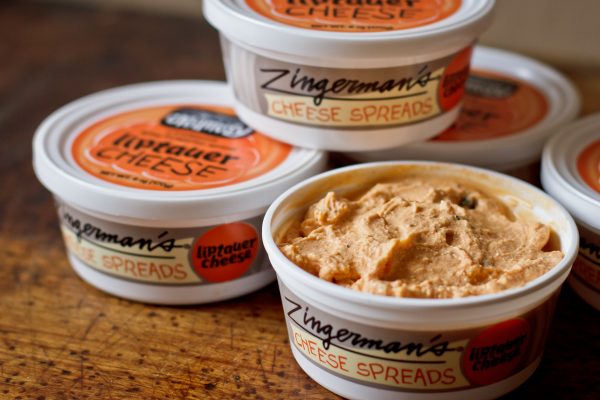
Liptauer cheese (pronounced “Lip-tower”) is a long-standing Hungarian tradition. The name originates in the Hungarian-influenced, Liptov region of Slovakia. It’s a superb cheese spread spiced with peppers, slightly spicy, super delicious, and frighteningly addictive. And you can eat it on just about everything at any time of the day!
In central Europe, Liptauer would most likely be made with fresh sheep’s milk cheese. Here, we use our fresh cow’s milk Farm Cheese from the Creamery (we don’t have enough sheep around these parts), then blend in some minced fresh garlic, a good bit of Hungarian paprika, capers, toasted caraway, and just a touch of anchovy. The paprika is incredible—from the last farmstead paprika producer (yes, the family grows the peppers, dries them and mills them, all on-site) in the country. It’s moderately spicy and exceptionally flavorful—there’s a big burst of flavor in every bite! I’ve been told that in Hungary it was often served in casinos and bars, which makes sense—it’s definitely the sort of stuff that goes great with good salami and good beer. Liptauer Cheese is lovely on rye bread from Zingerman’s Bakehouse, on bagels, baked potatoes, used as hors d’oeuvre, or as the base for spicy finger sandwiches. Really good on a roast beef sandwich. Or stick a soft spoonful on a steak that’s just off the grill. Thinking about that Pimen-Tuna sandwich at Zingerman’s Roadhouse, I’m betting it would be great in that context as well—mix it at home with some of that great tuna we get from the Ortiz family.
Available at the Cream Top Shop, Deli, and online.
Sea Scallops at the Roadhouse
You really can taste the difference!

One of the most regular customer comments I regularly hear out at the Roadhouse is how good the sea scallops are. In part, this is a tribute to the skills of the sauté cooks on the line. But it’s probably just as much about the quality of the scallops we buy from our friends at Foley Fish in Boston. The Foley folks have been at this since 1920 and they have consistently supplied us (and others like Monahan’s in Kerrytown) for years.
One of the big, if little discussed, “secrets” to scallop quality is that most commercial versions these days are chemically treated to help them retain—in some cases even gain—moisture. Much as “water-added ham” has become the commercial norm (reducing costs, prices, and flavor across the board), so too, treated scallops are what most people have been served. By contrast, we only offer what are known in the trade as “dry-pack” scallops—no treating allowed. And we work with the Foley’s folks to take in only the top of the catch—the freshest scallops we can get. There really is a huge difference, which would explain why we’ve developed so many loyal fans for these over the years—we regularly get positive (often glowing) comments about how good they are. We have a lot of folks who order them almost every time they come in. Our long-time rep from Foley’s, Bill Gerencer, came out recently for a staff tasting where we compared the Foley “dry pack” scallops with something being sold by others on the market as “all-natural scallops.” The difference was drastic!
Celebrate the season with a plate of sautéed scallops at Zingerman’s Roadhouse soon!
Need more gift ideas? Subscribe to Ari’s Top 5—my weekly enews dedicated to 5 things in the Zingerman’s Community of Businesses that I love!