
TIME TO EAT! African American Dinner menu pt. 2
A Fundraiser for the African American Cultural & Historical Museum of Washtenaw County
The 9th Annual African American Foodways Dinner is happening this coming Tuesday, January 14 at 7pm at Zingerman’s Roadhouse. Here, Ari talks about the menu choices for the dinner, and their history within the African American cooking lexicon.
The Menu!
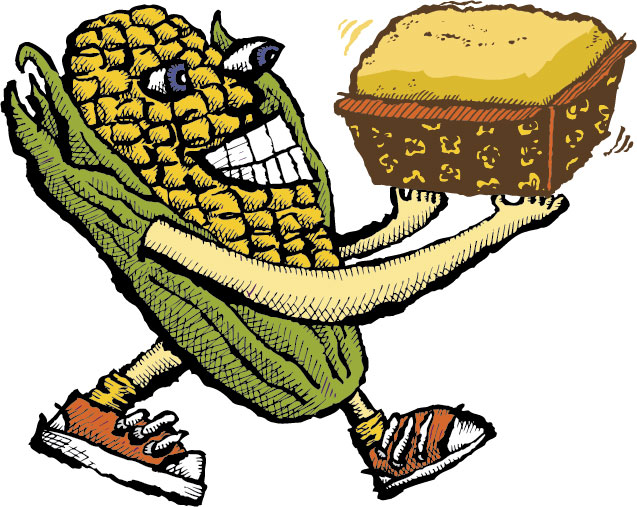 Cornbread Harriett Tubman
Cooks in slave kitchens prepared wheat bread and biscuits, but rarely ate much of them. Adrian Miller quotes former slave Anna Miller, “White flour, we don’ know what dat tastes like. Jus’ know what it looks like.” Cornbread was called “John Constant;” wheat bread was “Billy Seldom.” The recipe we’ll be preparing for the dinner comes from The Historical Cookbook of the American Negro, published in 1958 by the National Council of Negro Women. Vivian Carter, honorary president of the organization grew up knowing Ms. Tubman and was adamant that she loved this recipe. It’s made with fried salt pork that’s blended with fine yellow cornmeal, some white flour, a bit of baking powder and soda, sour milk, eggs, salt, and brown sugar.
Hoppin’ John
Although we’re a few weeks into the month of January, Hoppin John is still THE dish that you want to be eating to ring in the New Year. Legend has it that the more black-eyed peas you can eat the more good luck you’ll have in the year to come. If you aren’t familiar with Hoppin’ John it’s a simple but classic dish of black-eyed peas, rice, and pork of some sort. Judith Carney writes that, “Although Hoppin’ John is a Southern dish, its contours are distinctly African, with two main ingredients and origins linked to the slave dwellings and plantation kitchens of the South. Hoppin’ John is traditionally prepared alongside plates of collard greens.”
“Crowder peas” is the formal family name of this bean, and black-eyed peas are the best-known member of the family. The actual tradition of Hoppin’ John seems to have started with red field peas actually, not black eyed peas. The latter were just more readily available. Fortunately for us, Glenn Roberts is growing old style Sea Island red peas, which are DELICIOUS! Given Hoppin’ John’s simplicity—field peas, pork and rice— there’s no way around the obvious; the better the beans the better the dish.
There are a number of standard explanations for the name Hoppin’ John. One is that it’s from the French pois pigeon (or “pigeon peas”). Another is that New Year’s and the serving of the dish come close on the heels of the feast of St. John the Evangelist. I’ve also heard it attributed to a children’s game about a one-legged (hence, hopping) slave named John. Adrian Miller cites a New York Amsterdam News article that said, “In Harlem and Chicago’s South Side, they say that “Eating peas is just for coins. Collars and other greens bring folding money. And pig, all part of the pig, will make you healthy, wealthy and sharp.” This meal has all three, so hopefully you’ll have a very successful 2014!
Collard Greens
Judith Carney writes that, “A signature ingredient of the food- ways of Africa and the diaspora is greens. Perhaps no other cooking traditions feature them so prominently. In West Africa there are more than one hundred fifty indigenous species of edible greens,” and greens were used to thicken soups (sesame, hibiscus and, of course, okra). There, they were generally cultivated, cooked, and sold at markets by women. That tradition continued in the American South—unlike field crops like corn, cotton or rice, greens were commonly grown in kitchen gardens from whence they could be easily added to the cook pot.
At the Roadhouse we cook large quantities of collard greens every week. We simmer them for hours with lots of applewood smoked bacon and pigs feet, and serve ‘em with a bottle of pepper vinegar on the side. Secret tip: ask for a bit of extra pot likker on the side. It’s the “broth” in the pot from the cooking of the greens. Three hundred years ago it was often given to slave children to give them much needed nutrients in less-than-ideal living conditions. Today it’s worth having some just because it tastes so good.
 Carolina Gold Rice
Both rice and rice-growing techniques came to South Carolina from West Africa. It was one of the biggest “contributions” (if a forced expropriation of knowledge and skill can be called a “contribution”) of enslaved Africans to Southern agriculture, financial success and foodways. At the Roadhouse, we serve Carolina Gold rice from Glenn Roberts and Anson Mills. It is THE varietal that would have been grown by en-slaved Africans, and then African American sharecroppers in South Carolina in the late 18th and early 19th centuries. It got its name from the golden hue of the ripe rice stalks in the fields and it’s a romantic image, but there was nothing romantic about the work that enslaved Africans did to make the rice a reality. Rice growing and hand-harvesting is extremely difficult work under the best of conditions, and they were working in anything but good conditions. Carolina Gold rice was so highly esteemed it was shipped to the royal courts of Europe. Rice growing dominated South Carolina agriculture and eating. Everything about this rice is exceptional—its history, its modern day revival after 75 years of being out of production, the way it’s being grown and processed by Glenn and the crew at Anson Mills, and, most importantly, the way it tastes.
Candied Yams
The name “yam” is actually of African origin. It’s a large tuber that’s remains one of the main starches eaten in West Africa to this day. Yam growing was carried by enslaved Africans to South America, but the tubers never took in North America. Although botanically the two have nothing in common, the name was misapplied to the American sweet potato. What we know here as sweet potatoes probably originated in Peru. Europeans encountered them there and brought them back to Europe. There, as Adrian Miller explains, “the sweet potatoes were not the food of the masses by any means; in fact they were considered such a rare and expensive delicacy that only royalty and the wealthy could afford to eat them.” They were often prepared as the English did another orange vegetable, the carrot, by “candying” them with sugar. Sweet potatoes were critical for survival in cold winter months. Adrian Miller writes that, “Many slaves and share-croppers talked about constructing and maintaining sweet potato ‘banks.’” And he quotes Natalie Joffe’s study of African American food habits in the 1940s in which she explains that sweet potatoes “are regarded by tenants as exactly similar to the urban worker’s store of wages’ except that the potatoes are surer.” With all of that history of their integral role in the poor person’s southern kitchen, it’s no surprise that “yams” or sweet potatoes have stayed a featured dish in the African American culinary repertoire.
 Mac ‘n’ Cheese
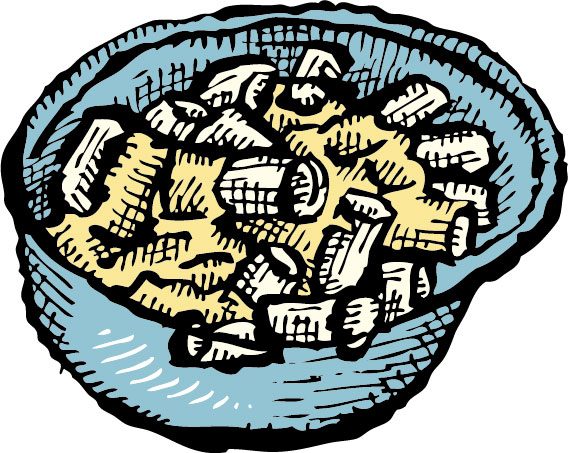
Obviously there was nothing like it in West Africa, as there was neither wheat nor cheese to be had. But Adrian Miller is adamant that it’s a classic of African American cookery. As he explains: “Over two centuries, macaroni and cheese became ‘mac ‘n’ cheese,’ a soul food favorite, because African American cooks have been called on to make the dish in wealthy and poverty stricken kitchens alike. For soul food cooks, mac ‘n’ cheese had multiple identities as rich people’s food, a special occasion food, a convenient comfort food, a meal-stretcher, and a poverty food.”
Macaroni and cheese in the South originally would have been eaten only by the European elite. Jefferson is generally credited with bringing the dish back from Europe. He was ambassador to France from 1784 to 1789, and also spent time in Italy. He was major devotee of good food and fine cooking. He sent his slave James Hemmings (Sally’s brother) to be trained in the best kitchens of Paris. He also brought back a pasta-making machine and Parmesan cheese. In the U.S. the tradition was solidified as more Italians came over in the late 19th and early 20th centuries. Adrian theorizes that the large Italian community in New Orleans exposed the even larger black community to the dish, and its popularity spread from there. In the end, Adrian writes, “African Americans chose this foreign, European food and elevated its status within the black community. Today mac ‘n’ cheese can be considered a ‘black thing’ because African Americans adopted the dish so success- fully that its ethnic origins were completely forgotten.”


